Chinese AI Models April 2026: Kimi, Qwen, DeepSeek V4
Kimi K2.6 and Qwen 3.6 launched, DeepSeek V4 is rolling out, and Chinese image generators challenge Midjourney. The April 2026 guide.
TL;DR
Kimi K2.6 just launched on April 20, 2026, bringing massive 300-agent swarm orchestration and autonomous coding capabilities, firmly rivaling GPT-5.4.
Alibaba released Qwen3.6-35B-A3B. Activating only 3 billion of its 35 billion parameters per token, it delivers near-frontier agentic coding at just $0.38 per million tokens.
DeepSeek V4 officially launched on April 24, 2026. Featuring the 1.6 Trillion parameter V4 Pro and the highly efficient V4 Flash, its Hybrid Attention architecture and 1 million token context are reshaping API economics.
GLM-5.1 from Zhipu AI leads the BenchLM.ai Chinese model rankings (Score: 84), trained entirely on domestic Huawei Ascend chips. It tops SWE-Bench Pro, beating GPT-5.4 and Claude Opus 4.6.
Chinese image generation models like ByteDance's Seedream 5.0 and Zhipu's CogView are matching US models (Midjourney/DALL-E) in photorealism, while fundamentally dominating in typography rendering and regional aesthetics.
Chinese AI Models in Late April 2026: DeepSeek V4, Kimi K2.6, Qwen 3.6, and the Full Landscape
One year after DeepSeek R1 triggered a trillion-dollar selloff in global tech stocks and forced the AI industry to reconsider everything it assumed about who could build frontier models, the Chinese AI ecosystem has not just caught up, it is explicitly setting the pace.
As of late April 2026, Chinese labs are defining the global frontier in agent orchestration, open-weight deployment, extreme cost efficiency, and context window scaling. The massive launches of Kimi K2.6 and the Alibaba Qwen 3.6 series earlier this month, combined with the imminent full release of DeepSeek V4, have narrowed the gap with Western proprietary models from months to mere days.
This guide breaks down the actual state of Chinese AI models in late April 2026, comparing language benchmarks, pricing, and a deep-dive into the escalating war over AI image generation. For a broader view of the AI landscape, see our AI model release tracker overview.
Evaluation Methodology: At Renovate QR, our research team evaluates these models based on three core pillars: Independent benchmark verification (via BenchLM.ai, SWE-Bench Pro, and tbench.ai), real-world API cost-to-performance ratios, and enterprise deployability (open-weight licensing versus proprietary APIs).
The Developer Decision Matrix: Which Model Should You Use?
Before diving into the deep technical breakdowns, here is our late-April 2026 consensus on how to route your AI workloads:
| Use Case / Workload | Recommended Model | Cost Efficiency | Open-Weight Available? |
|---|---|---|---|
| Autonomous Coding / Swarms | Kimi K2.6 | High ($0.45/1M tokens) | Yes (Modified MIT) |
| High-Volume Data / Edge | Qwen3.6-35B-A3B | Ultra-High ($0.38/1M tokens) | Yes (Apache 2.0) |
| 1M Context & Advanced Math | DeepSeek V4 Pro | High ($1.74/1M tokens) | Yes |
| Local Enterprise GPU Clusters | MiMo-V2.5-Pro | High | Yes |
| Image / Video Generation | Seedance 2.0 | High (Ecosystem tied) | No |
The Visual Frontier: GPT Image 2 vs. Chinese Image Generation
While large language models get the most press, the quietest revolution in early 2026 has been in image generation. Historically dominated by standalone US platforms, the landscape has fundamentally shifted. Midjourney has largely fallen out of the race, unable to keep up with the deep native integrations required by modern multimodal ecosystems.
The true battle is now between OpenAI's newly released GPT Image 2 (launched alongside GPT-5.5) and Chinese multimodal heavyweights, specifically ByteDance's Seedream 5.0 and Zhipu's CogView suite.
Comparative Analysis: Where the Strengths Lie
| Feature / Capability | OpenAI GPT Image 2 | Chinese Models (Seedream 5.0 / CogView) |
|---|---|---|
| Text Rendering & Typography | Excellent with Latin alphabets and basic logical layouts. | Flawless rendering of complex Chinese Hanzi, vertical text, and traditional calligraphy. |
| Cultural Accuracy | Highly effective globally, but occasionally stereotypes Asian historical aesthetics. | Hyper-accurate representation of Hanfu, Wuxia/Xianxia aesthetics, and regional architecture. |
| Physics and Coherence | Absolute leader in spatial reasoning and native Sora-level video cohesion. | Highly stylized and optimized for vibrant, mobile-first social media feeds like Douyin. |
| Content Guardrails | Extremely strict on copyright, public figures, and demographic bias. | Heavily filtered for politically sensitive content according to local regulations. |
| Ecosystem Integration | Deeply woven into ChatGPT and the broader OpenAI agentic suite. | Seamlessly integrated into consumer apps. One tap turns a Seedream image into a Seedance 2.0 video. |
The Bottom Line on Visual AI: If you need absolute physical realism or complex spatial arrangements for a global audience, OpenAI's GPT Image 2 is unmatched. However, for campaigns targeting the APAC region, localized visual storytelling, or short-form social media asset generation, Chinese models are now the objectively superior choice due to their deep cultural context windows and perfect Hanzi typography.
Zhipu GLM-5.1: The Benchmark Leader
GLM-5.1 from Beijing-based Zhipu AI emerged in early April 2026 and currently holds the crown on the BenchLM.ai Chinese model leaderboard with a composite score of 84.
- The Hardware Independence Story: GLM-5.1 is a large-scale model trained entirely on a 100,000-chip Huawei Ascend cluster. It was built specifically for multi-step agentic reasoning and complex programming, entirely free of Nvidia dependencies. This proves that at the scale of a genuine frontier model, domestic Chinese hardware infrastructure has reached absolute viability.
- The Cog Multimodal Suite: Zhipu is not just a text lab. GLM-5.1 is deeply intertwined with their visual models, CogView (for image generation) and CogVideo. For a detailed technical analysis, read our GLM-5.1 Review. By funneling GLM-5.1's massive reasoning capabilities into CogView's prompt adherence, Zhipu allows users to request highly complex, multi-subject images and receive near-perfect spatial arrangements.
Alibaba Qwen 3.6: The New Agentic Tier and Open-Weight Powerhouse
Throughout April 2026, Alibaba completely refreshed its lineup with the Qwen 3.6 family, shifting the model's focus from standard chat outputs to highly capable, agent-driven workflows. For detailed benchmarks and pricing analysis, see our Qwen 3.6 Plus Review. Compare Qwen with other models on our AI comparison page.
- Qwen3.6-Max-Preview: Alibaba's new proprietary flagship introduces a
preserve_thinkingfeature that allows the model to retain internal reasoning traces across multiple steps in a workflow, vastly reducing errors in long-horizon coding. - Qwen3.6-Plus: Features a default 1 million token context window, excelling in cross-modal reasoning and physical world visual analysis.
- Qwen3.6-35B-A3B: The open-source darling of the month. This sparse Mixture-of-Experts model houses 35 billion total parameters but activates only 3 billion per token.
The Cost Disruption of Qwen 3.6
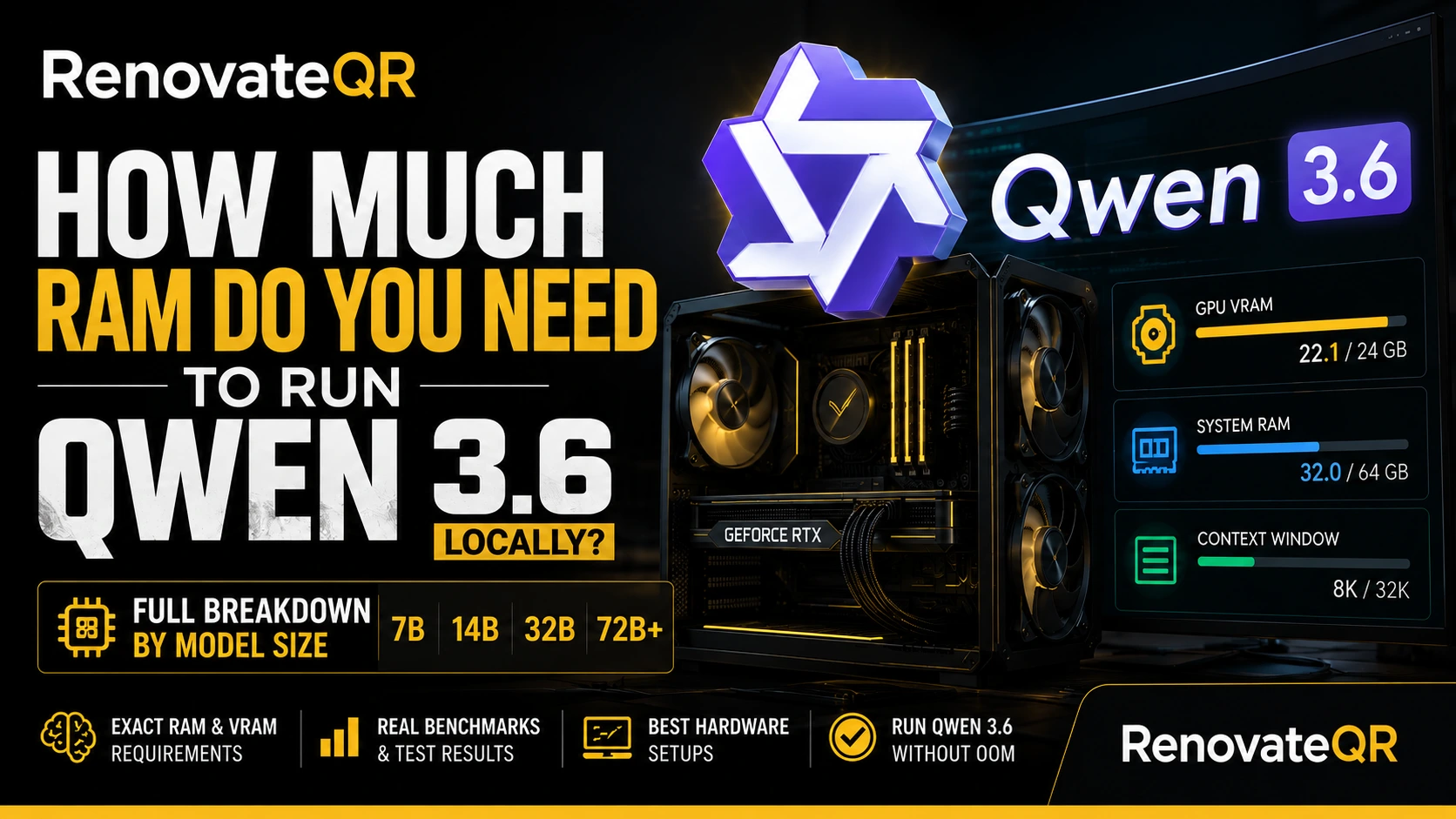
Qwen3.6-35B-A3B is fundamentally altering API economics. At $0.38 per million input tokens, it heavily undercuts Western alternatives while remaining highly competitive on benchmarks like GPQA Diamond. Because of its sparse 3B active parameters, developers are successfully running this model locally on standard 22GB RAM hardware setups. For hardware recommendations when self-hosting the Qwen 3.6 family, see our Best GPU for Local LLMs and Qwen 3.6 RAM requirements guides.
Moonshot Kimi K2.6: The New Agentic Standard
On April 20, 2026, Beijing-based startup Moonshot AI disrupted the market with the release of Kimi K2.6. For complete benchmarks and agentic capabilities analysis, read our in-depth Kimi K2.6 Review. See how Kimi compares to Claude Opus 4.7 in our detailed comparison.6 features a new Swarm 2.0 Orchestrator capable of horizontally scaling to 300 parallel sub-agents executing up to 4,000 coordinated steps simultaneously.
- Context & Vision: It utilizes a 262,144 token context window and Moonshot's native-resolution MoonViT encoder, allowing it to digest complex UI mockups and massive codebases without down-scaling.
- Coding Dominance: K2.6 scored an astonishing 58.6 on SWE-Bench Pro, putting it head-to-head with top-tier models like Claude Opus 4.7 and OpenAI's GPT-5.5.
DeepSeek V4: The 1.6 Trillion Parameter Giant
On April 24, 2026, DeepSeek officially launched the V4 series. The release completely rewrites the economics of massive AI scale and introduces two distinct open-weight models. The 1.6 Trillion parameter V4 Pro and the highly efficient 284 Billion parameter V4 Flash.
DeepSeek V4 is the most anticipated open-source model release of 2026, and after months of missed windows, April is the month it arrives. For the complete technical breakdown and release timeline, read our DeepSeek V4 Preview and DeepSeek V4 Review & Benchmarks. You can also explore DeepSeek's capabilities and pricing on our DeepSeek tool page.
The Hybrid Attention Breakthrough
The biggest challenge in AI right now is the immense computing cost of processing massive context windows. DeepSeek V4 solved this by inventing a custom Hybrid Attention architecture. By combining Compressed Sparse Attention with Heavily Compressed Attention, both V4 Pro and V4 Flash natively support a 1 million token context window.
Because of this extreme compression technique, V4 Pro can process these massive documents using only 27 percent of the compute required by their older models.
The Pricing Disruption
DeepSeek continues to aggressively commoditize intelligence. V4 Pro API access costs just $1.74 per million input tokens, while V4 Flash costs an almost unbelievable $0.14 per million input tokens. For high-volume data processing, this makes DeepSeek V4 the undisputed king of API economics.
Xiaomi MiMo-V2.5-Pro: The Hardware-Optimized Heavyweight
With all the noise from proprietary APIs, the open-weight community saw massive shifts of its own this month. Xiaomi surprised the market by dropping MiMo-V2.5-Pro.
Initially mistaken by the developer community for a stealth DeepSeek test due to its incredible coding performance, MiMo-V2.5-Pro is a true heavyweight open-source model. Coming from a hardware-first company, this model is designed specifically to maximize memory bandwidth and run smoothly on local enterprise GPU clusters. It handles incredibly large codebases and complex agentic workflows natively, making it the premier choice for enterprise teams running self-hosted infrastructure.
ByteDance Doubao 2.0 & Tencent Hunyuan: Consumer Giants
While developers heavily debate open weights, consumer distribution is dominated by two mega-corporations.
- ByteDance Doubao 2.0: Integrated directly into Douyin (TikTok China), Doubao benefits from a multimodal trifecta of interconnected models. Doubao 2.0 handles text, Seedream 5.0 handles images, and Seedance 2.0 generates video. Seedance 2.0 recently shocked the industry by generating multi-shot film sequences in 60 seconds from simple text prompts.
- Tencent Hunyuan 3.0: Expected to fully launch by the end of April, Hunyuan is directly integrated into WeChat, granting it access to 1.4 billion active users. Led by former OpenAI researcher Shunyu Yao, Hunyuan focuses heavily on scenario-driven applications over pure benchmark optimization.
How to Deploy Safely: Addressing Data Sovereignty
The right question for enterprise developers is no longer whether these models are capable. The ultimate question is where your data actually goes.
If you use the public APIs of Qwen, DeepSeek, or Kimi, your data is processed on servers subject to Chinese jurisdiction. For teams with strict enterprise security requirements, this is often a non-starter.
The Solution is Self-Hosting: The massive advantage of the Chinese AI ecosystem is its unwavering commitment to open weights. By utilizing models like Qwen3.6-35B-A3B, MiMo-V2.5-Pro, or DeepSeek V4 Pro, you can download the weights, quantize them, and run them locally on your own cloud hardware. You get frontier-level intelligence with absolute zero-leak data privacy.
The Bigger Picture: The 2026 Reality
The phrase "DeepSeek moment" became shorthand in 2025 for the realization that the US did not have a monopoly on AI.
As we close out April 2026, the framing has shifted entirely. With Kimi K2.6 orchestrating massive agent swarms, Xiaomi perfecting hardware-efficient workflows, and DeepSeek V4 mastering 1 million token contexts natively on domestic chips, these models are no longer just cheaper alternatives. They are actively defining the global frontier.
If your enterprise stack isn't at least testing open-weight models from Alibaba, DeepSeek, or Moonshot, you are paying a massive premium for proprietary Western APIs that are no longer strictly superior. Explore all AI tools or dive deeper into what is agentic AI to understand how these Chinese models are reshaping the future.
Sources & References
- DeepSeek, for the V4 rollout timeline
- Moonshot AI, for Kimi K2.6 release details
- Alibaba Qwen, for Qwen 3.6 documentation
- Artificial Analysis, for independent benchmark cross-checks
Frequently Asked Questions
What is Kimi K2.5 and why is it important?
Released on April 20, 2026, Kimi K2.6 is Moonshot AI's latest multimodal agentic model. It builds on the K2.5 1T parameter MoE architecture but introduces a massive "Swarm 2.0" upgrade, allowing it to coordinate up to 300 autonomous sub-agents simultaneously.
How do Chinese AI image generators compare to Midjourney or DALL-E?
US models like Midjourney excel at global artistic styles and lighting physics. However, Chinese models like Seedream 5.0 and CogView have surpassed US models in rendering perfect Chinese typography (Hanzi), understanding deep Asian cultural contexts, and seamless video-to-image integration. Chinese models are, however, subject to stricter domestic content filtering.
What is the new Alibaba Qwen 3.6 series?
Released throughout April 2026, the Qwen 3.6 family includes Qwen3.6-Plus, the highly efficient open-weight Qwen3.6-35B-A3B (which activates only 3 billion parameters per token), and the proprietary Qwen3.6-Max-Preview. The series introduces a new "preserve_thinking" feature for long agentic workflows.
What makes Zhipu GLM-5.1 stand out?
Zhipu GLM-5.1 (released April 7, 2026) is a freely available open-source model built for complex, long-running programming tasks. It became the top model on SWE-Bench Pro, beating GPT-5.4 and Claude Opus 4.6. The model is trained entirely on a 100,000-chip Huawei Ascend cluster, proving that China can build top-tier AI completely free of Nvidia GPUs.
Is it safe to use Chinese AI models for enterprise work?
If handling sensitive client data, the ultimate mitigation is self-hosting. Open-weight models like Qwen3.6-35B-A3B and DeepSeek V4 Pro can be run offline on your own local or cloud infrastructure, eliminating data sovereignty and jurisdiction risks entirely. For our detailed analysis of GLM-5.1's performance and training infrastructure, see the[GLM-5.1 Review](/blog/glm-5-1-review-z-ai-coding-benchmark-2026). Compare all Chinese models side-by-side on our[AI Tools directory](/tools).
Renovate QR Newsletter
Stay sharp on AI & tech
Our best reviews, comparisons, and guides — delivered weekly. No noise, no spam.