What Is Agentic AI? How Agents Plan, Decide, and Act
Agentic AI plans, decides, and acts on your behalf. A plain-English explanation of what AI agents are, how they work, and what they mean for work in 2026.
TL;DR
From AI that responds to prompts → AI that receives goals, makes plans, uses tools, and acts autonomously.
Perceive → Reason → Act → Learn loop. Agents iterate until goals are achieved without step-by-step human direction.
60%+ enterprise software will include agentic capabilities (Gartner). Chatbots will feel dated compared to goal-delegation.
Computer use agents, Claude Code, research assistants, workflow automation - already handling multi-hour tasks.
What Is Agentic AI? How AI Agents Are Changing the Way We Work in 2026
For the past few years, AI meant one thing to most people: a chatbot. You type a question, it types back an answer. Useful - but ultimately passive. It waits for you. It does what you ask, nothing more.
Agentic AI is something different. It doesn't wait to be prompted. It receives a goal, makes a plan, uses tools, takes actions, and keeps going until the job is done. In 2026, this shift from AI that responds to AI that acts is one of the most important - and least understood - transitions in technology.
This guide explains what agentic AI actually is, how it works under the hood, where it's already in use, and what it means for your work.
The Simple Definition
Agentic AI refers to artificial intelligence systems that can operate autonomously to complete complex, multi-step goals with minimal human guidance. Unlike a standard chatbot - which reacts to each individual input - an agentic AI system perceives its environment, reasons about what needs to happen, takes actions using tools and software, learns from the results, and continues iterating until it reaches the desired outcome.
The best analogy: a standard AI assistant is like a calculator - powerful, but it does exactly what you ask and nothing more. An agentic AI is closer to a capable colleague you can delegate a project to and trust to figure out the details.
MIT Sloan professor Kate Kellogg and her co-researchers describe AI agents as systems that "can execute multi-step plans, use external tools, and interact with digital environments to function as powerful components within larger workflows."
How Does Agentic AI Actually Work?
Most agentic AI systems operate through a continuous loop called Perceive → Reason → Act → Learn:
- Perceive - The agent takes in information from its environment: your instructions, data from connected systems, results from previous actions, and real-time inputs.
- Reason - It uses a large language model (like Claude or GPT-5) to plan: break down the goal into steps, decide what tools to use, and figure out what to do next.
- Act - It executes: calling APIs, browsing the web, writing and running code, filling forms, sending messages, or controlling software.
- Learn - It evaluates the result of its action and adjusts its approach if something didn't work.
This loop repeats until the task is complete or the agent determines it needs human input.
The key enabler is tool use - the ability to connect to external systems via APIs. An agentic AI doesn't just talk about sending an email; it actually connects to your email service and sends it. It doesn't describe how to book a flight; it connects to booking systems and completes the reservation.
Agentic AI vs. Generative AI: What's the Difference?
It's worth being precise here because the terms are often conflated.
Generative AI (like standard ChatGPT or Claude) takes a prompt and generates a response - text, code, images, analysis. It's reactive and single-turn. It does what you ask, in the moment.
Agentic AI is generative AI plus autonomy, memory, planning, and tool use. It's proactive, multi-step, and can run for minutes, hours, or longer without your involvement. IBM puts it well: "Agentic AI is the framework; AI agents are the building blocks within it."
An easy way to remember: generative AI answers the question "What should I do?" Agentic AI answers "I'll figure out what needs doing and handle it."
To understand how agentic AI uses retrieval to access current information and private documents, see our guide to What Is RAG. For an overview of the models powering the most capable agentic tools in 2026, see our AI model release tracker guide.
Where Is Agentic AI Already Being Used?
Agentic AI isn't a distant concept - it's in active deployment across industries right now.
Sales and Marketing
Agentic sales tools monitor signals like website visits, job changes, and competitor activity, then autonomously personalize outreach, send follow-up emails, and book meetings - all without a human rep managing each step. These systems can monitor leads around the clock and escalate to a human only when the moment is right.
Customer Service
Rather than waiting for a customer to complain, agentic systems monitor delivery data, detect problems proactively, and trigger responses automatically. In one example from a logistics company: when a delivery van breaks down, an agent automatically reschedules the delivery, applies a service credit, and notifies the customer - before the customer even realizes there's a delay.
Finance and Banking
JPMorgan Chase, among others, is exploring AI agents for fraud detection, customized financial advice, and loan approval automation. McKinsey reports that banks implementing agentic AI for KYC and AML compliance workflows have realized productivity gains of 200% to 2,000%.
Software Development
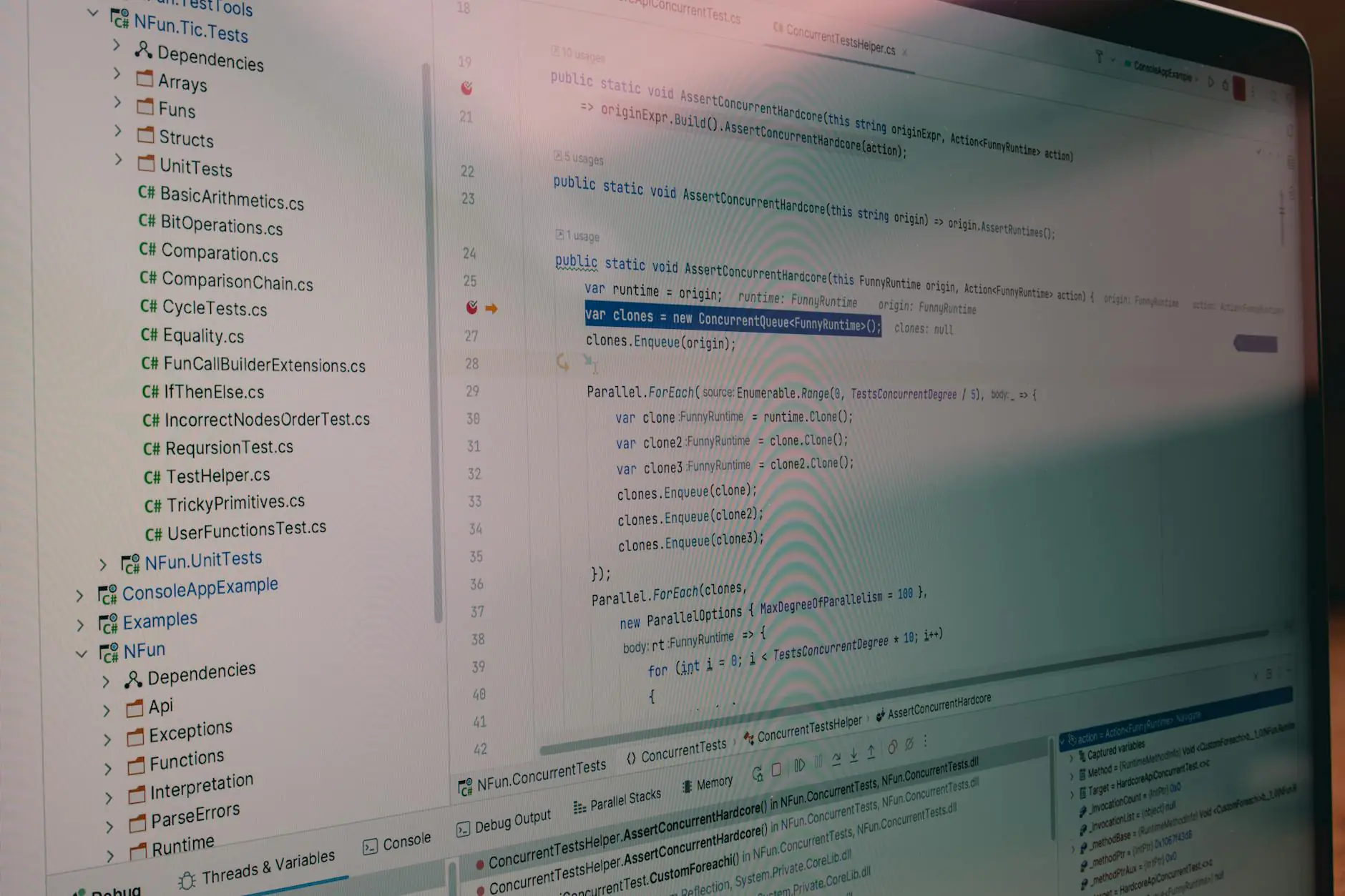
This is where agentic AI is most visible to developers in 2026. Claude Code, OpenAI Codex, Cursor's Agent mode, and Windsurf are all agentic coding tools - they receive a task, plan a solution, write the code, run tests, and fix errors, all without step-by-step human instruction. Anthropic reports that in 2026, Claude Code is used by the majority of enterprise engineering teams.
Antigravity (Google DeepMind) takes this a step further with its Manager Surface: a dedicated orchestration layer where you can assign multiple autonomous agents to different parts of a project simultaneously. One agent audits incoming code, another builds a new feature, a third runs validation - all without your active involvement. This is agentic AI at the platform level, not just the tool level.
Open-weight models are also making agentic coding accessible at zero API cost. Google's Gemma 4 (Apache 2.0) ships with native support for function calling and tool use from day one, making it a practical foundation for self-hosted agentic coding pipelines.
Healthcare
Agentic systems in ICUs help clinical teams manage patient data in real time, flag anomalies, and coordinate care decisions. In drug discovery, agents can autonomously screen thousands of medical images for specific anomalies at a speed no human team could match.
Multi-Agent Systems: When Agents Work Together
The most powerful agentic deployments in 2026 aren't single agents - they're multi-agent systems where specialized agents collaborate on complex workflows.
Think of it like a digital assembly line: one agent monitors incoming data, a second classifies it, a third drafts a response, a fourth sends it. Each agent is an expert in its narrow domain; together they handle an entire workflow end-to-end.
Google Cloud's 2026 AI Agent Trends report identifies this as one of the five most important shifts in enterprise AI. In telecom, for example, agents can now autonomously detect network anomalies, open a field service ticket, and alert the affected customer - as a single integrated, fully automated sequence.
The same pattern is emerging in creative production. invideo agent lets filmmakers work with specialized expert agents for roles such as cinematography, casting, and storyboarding, while those agents share the same project context and hand work between one another. The filmmaker directs the crew and approves creative decisions rather than repeatedly briefing isolated tools from scratch.
What About Human Oversight?
A common concern with agentic AI is: "If it's acting on its own, who's accountable?"
This is a legitimate question, and the most successful agentic deployments address it deliberately. Most systems use a human-in-the-loop design, where the agent handles the routine steps autonomously but escalates key decisions to a human. In financial underwriting, for instance, an agent gathers data and drafts recommendations - but a human reviews and approves the final decision.
Gartner predicts that by 2028, 33% of enterprise software applications will include agentic capabilities. The companies pulling ahead in 2026 are the ones designing governance structures now - defining clearly what agents are and aren't authorized to do - rather than waiting for problems to emerge.
The Shift in How We Work
Perhaps the most significant prediction about agentic AI is about roles, not tools. In 2026, analysts suggest the primary shift isn't that AI takes people's jobs - it's that the nature of people's jobs changes.
As one recent analysis puts it: "In 2026, every employee - from analysts to VPs - becomes a human supervisor of agents. Instead of performing every mundane task, their primary role is to manage a team of specialized agents."
The skills that become most valuable aren't technical. They're the ability to define goals clearly, evaluate agent outputs critically, design workflows that combine human judgment with automated execution, and know when to intervene.
Agentic AI doesn't replace human workers. It changes what human work means.
The Bottom Line
Agentic AI is the most consequential shift in the AI landscape since the launch of large language models. It moves AI from the realm of assistance into the realm of execution - from answering questions to taking action.
It's not science fiction. It's running in production, today, across banking, logistics, healthcare, software development, and marketing. The question for individuals and organisations in 2026 isn't whether to engage with agentic AI - it's how to do so thoughtfully, safely, and effectively.
Our Research Methodology
This article draws on peer-reviewed research, industry reports, and expert analysis published between late 2025 and April 2026, including:
- MIT Sloan Management Review (February 2026)
- IBM Think: Agentic AI vs. Generative AI
- Google Cloud AI Agent Trends 2026 Report
- McKinsey & Company: AI in Banking Analysis
- Gartner Enterprise Software Predictions 2026-2028
- Kore.ai State of AI Report 2026
For a practical breakdown of the best agentic developer tools available today - including Claude Code, Antigravity, Windsurf, and Cursor - see our Best AI Coding Tools 2026 guide. You can compare agentic models by benchmark, context window, and pricing in our AI Tool Directory.
Sources & References
- MIT Sloan: Agentic AI, Explained
- IBM: Agentic AI vs. Generative AI
- Google Cloud: AI Agent Trends 2026
- Gartner: Enterprise AI Predictions
- Kore.ai: What Is Agentic AI?
Last updated: April 2026. AI capabilities evolve rapidly - always verify the latest developments on official vendor and research sites. For the most current model and tool landscape, see our AI Tool Directory.
Frequently Asked Questions
What is agentic AI?
Agentic AI goes beyond chatbots: instead of answering a question and waiting, it plans, decides, and acts on your behalf. You give it a goal, and it breaks the goal into steps, uses tools, and works toward completion, with the user supervising the results.
How is agentic AI different from generative AI?
Generative AI produces a response and stops. Agentic AI acts: it iterates, calls tools, retrieves information, and completes multi-step tasks. The difference is autonomy, which is also why oversight becomes a separate and important topic.
Where is agentic AI already being used?
Sales and marketing, customer service, finance and banking, software development, and healthcare. The post covers concrete examples in each field, including where agents run end to end and where they still hand back to a human.
What about human oversight?
The post dedicates a section to oversight because autonomy is the point of agents and the risk. The realistic 2026 pattern is human-supervised autonomy: agents execute the routine steps, humans approve the consequential ones, and multi-agent systems coordinate with defined roles and permissions.
Renovate QR Newsletter
Stay sharp on AI & tech
Our best reviews, comparisons, and guides — delivered weekly. No noise, no spam.