What Is RAG? Retrieval-Augmented Generation, Explained
RAG is one of the most important AI techniques and one of the least understood. How Retrieval-Augmented Generation works and where you already use it.
TL;DR
AI models have knowledge cutoffs and hallucinate when they don't know something. They can't access your private documents.
RAG = Retrieval-Augmented Generation. AI searches external knowledge bases in real-time, then generates answers using retrieved facts.
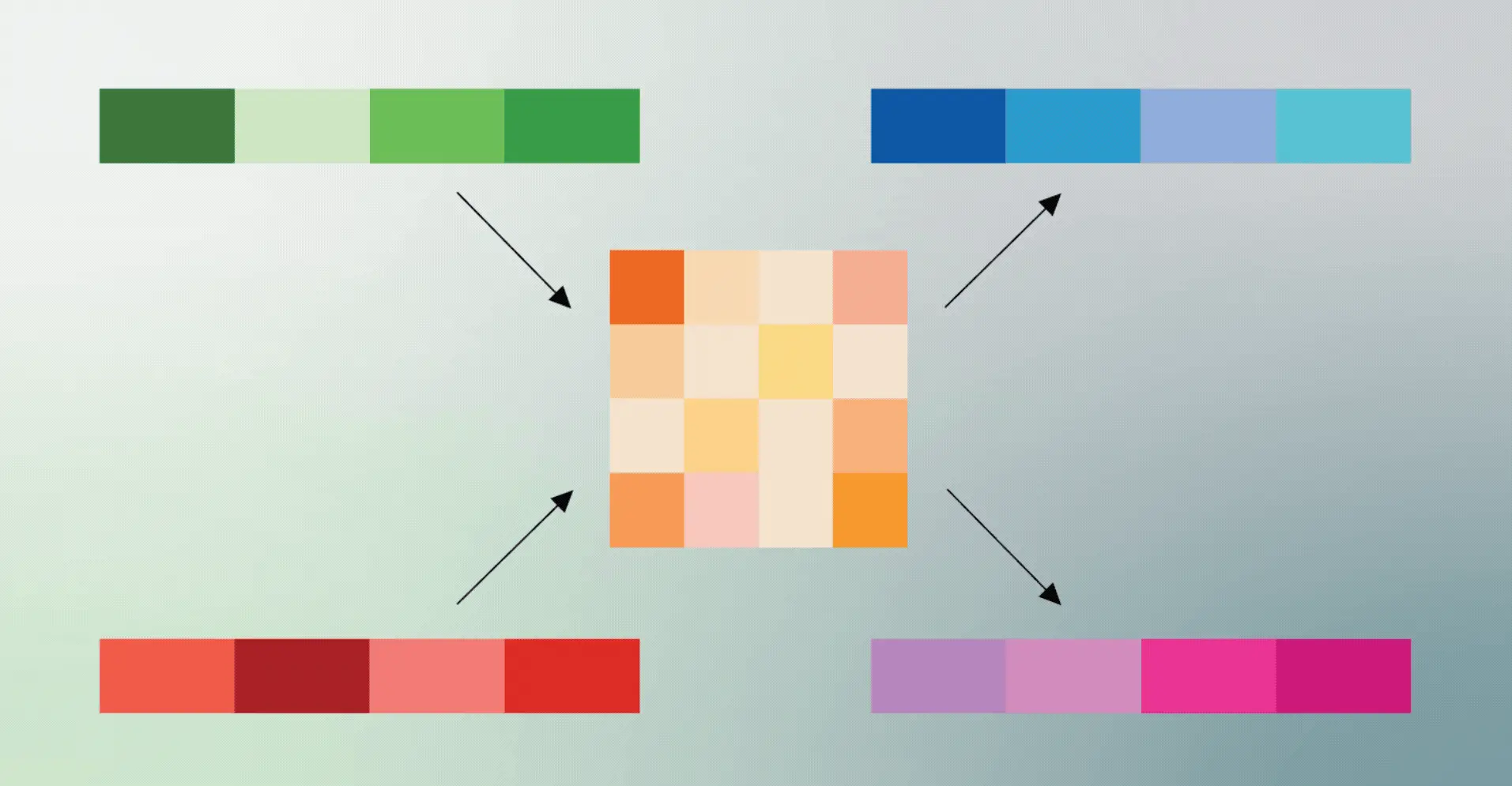
1) Convert query to embedding, 2) Search vector database for relevant chunks, 3) Inject context into prompt, 4) Generate grounded answer.
Powers enterprise AI that answers questions about internal docs, current news, and private data without retraining models.
What Is RAG? How Retrieval-Augmented Generation Makes AI Smarter
If you've used an AI tool that answered questions about your company's internal documents, your product's knowledge base, or last week's news - you've probably used RAG without knowing it.
RAG stands for Retrieval-Augmented Generation. It's one of the most important techniques in AI development in 2026, and understanding it helps explain why some AI tools feel remarkably accurate and up-to-date while others confidently make things up.
This is the plain-English explanation.
The Problem RAG Solves
To understand RAG, you first need to understand AI's core limitation: knowledge cutoffs.
Large language models like GPT-5 or Claude are trained on enormous amounts of data - books, websites, articles, code - scraped up to a certain date. After that training concludes, the model's knowledge is frozen. It knows nothing about events after its cutoff. It doesn't know your company's latest product specs. It doesn't know what changed in this week's legislation. It doesn't know what's in your internal handbook.
This creates a fundamental tension: AI models are trained to sound confident and fluent, but they're working from static, potentially outdated knowledge. When they don't know something, they can't simply say "I don't have that file." Instead, they often fill the gap with something that sounds plausible - a behaviour known as hallucination.
RAG was invented to solve this. The original term was coined in a 2020 research paper by Patrick Lewis and colleagues, initially at Facebook AI Research. As Lewis later put it: RAG is essentially a way of blending an LLM's language abilities with the real-time lookup process of a search engine.
How RAG Works: The Simple Version
The best analogy is an open-book exam versus a closed-book exam.
A standard AI (without RAG) is like a student taking a closed-book exam. They must answer questions using only what they memorised during training. They might do brilliantly on things they studied thoroughly, but they'll struggle or guess on things they didn't cover.
A RAG system is like a student with access to a specific set of reference books during the exam. Before answering any question, they look up the most relevant pages, read them, and then write their answer incorporating what they just read.
In technical terms, RAG works in three steps:
1. Retrieve - When a user asks a question, the system searches an external knowledge base (your company's documents, a database, a website, a product catalogue) for the most relevant information. This typically uses a technique called vector search, which finds documents based on meaning rather than just keyword matching.
2. Augment - The retrieved information is added to the user's original question, giving the AI model important context it wouldn't otherwise have. The combined prompt might look like: "Using the following product documentation: [retrieved text], please answer this question: [user's question]."
3. Generate - The AI model now answers the question using both its trained knowledge and the freshly retrieved information, producing a response that is grounded in real, specific, up-to-date content.
The whole process happens in seconds - invisible to the user, but fundamentally changing the quality of the answer.
Why RAG Matters So Much
It dramatically reduces hallucinations
By grounding AI responses in specific retrieved documents, RAG gives the model something real to reference rather than forcing it to guess. Research shows that properly implemented RAG reduces hallucination rates by up to 71%. This is why enterprise AI tools - which can't afford to make things up about contracts, compliance, or medical data - rely heavily on RAG.
It keeps AI up to date without retraining
Retraining a large language model is extraordinarily expensive - it can cost millions of dollars and take weeks. RAG sidesteps this entirely. When your knowledge base gets new information - a new product release, an updated policy, a recent news event - you simply update the external database. The AI model stays the same; its access to current information improves automatically.
It lets AI work with your private data
Most powerful AI models are trained on public internet data. Your company's internal documents, customer records, proprietary research, and operational data don't exist in any public dataset. RAG creates a bridge: your private data goes into a secure, searchable knowledge base, and the AI model can query it as needed - without your data ever being used to train the model or shared with others.
It makes AI responses verifiable
A key benefit of RAG is that the system can cite its sources. When an AI tells you something based on retrieved documents, it can show you exactly which document it pulled from. This is how AI tools like Perplexity.ai or Claude's web search feature work - they show you sources, enabling you to verify the information yourself. This transparency builds trust in ways that opaque AI responses cannot.
RAG in Practice: Where It's Already Being Used
Enterprise Knowledge Assistants
Hundreds of enterprise companies have deployed internal RAG-based tools that let employees ask questions about company policy, product documentation, HR guidelines, and historical project data - and receive accurate, sourced answers. Instead of searching through a SharePoint labyrinth, an employee can ask a question and get an answer in seconds.
Customer Service
Customer-facing chatbots using RAG pull answers from a company's knowledge base and product documentation, enabling them to resolve specific queries accurately. This is how Intercom's Fin and similar tools handle nuanced product questions without hallucinating details.
Healthcare
Medical AI assistants use RAG to pull from clinical databases, drug interaction records, and current treatment guidelines when supporting clinical decision-making. A model supplemented with an up-to-date medical index is dramatically more useful - and safer - than one relying solely on training data that may be years old.
Legal Research
Legal AI tools use RAG to search case law, legislation, and contract databases before generating analysis or drafting documents. The ability to retrieve current, jurisdiction-specific legal text is the difference between a useful legal AI and a liability.
Financial Services
Financial analysts use RAG-based tools that pull from live market data, company filings, and regulatory documents. The AI synthesizes what it retrieves, enabling analyses that would have taken hours to be produced in minutes.
RAG vs. Fine-Tuning: What's the Difference?
A common point of confusion: if you want an AI to know more about your domain, you have two main options.
Fine-tuning means retraining the model on domain-specific data, changing the model itself. This makes the model faster and more naturally "fluent" in your domain - but it's expensive, takes time, and the knowledge becomes static again the moment training stops.
RAG leaves the model unchanged and adds dynamic access to an external knowledge base. It's cheaper, faster to implement, keeps knowledge current without retraining, and lets you control exactly what the AI can access.
Most enterprise deployments in 2026 use both in combination: fine-tuning to give the model domain fluency and appropriate tone, and RAG to keep it current and grounded in specific, authoritative sources.
Agentic RAG: The Next Evolution
In 2026, RAG is evolving beyond simple retrieval into what researchers call Agentic RAG, and it's arguably the most important shift in applied AI this year.
In a basic RAG system, the retrieval step is fixed: the user asks a question, the system searches one knowledge base, and the model answers. Agentic RAG treats retrieval itself as a dynamic, multi-step process. An AI agent decides which knowledge sources to query, what questions to ask each source, when to do additional lookups if the first results are insufficient, and how to combine information from multiple sources into a coherent answer.
In coding contexts, this is what tools like Claude Code and Antigravity do when working across large repositories: they don't just retrieve one file - they plan which files to read, read them in sequence, and synthesise findings before generating code. Google's Gemma 4, with its native support for function calling and tool use, is increasingly deployed as the backbone of agentic RAG pipelines for privacy-sensitive enterprise workflows. For more on how these tools implement agentic retrieval, see our Best AI Coding Tools 2026 guide.
This makes RAG dramatically more powerful for complex, multi-step research tasks - exactly the kind of deep work that enterprise teams need AI to handle. You can explore which AI tools and models are optimised for RAG-based workflows in our AI Tool Directory.
The Bottom Line
RAG is one of the most consequential techniques in practical AI today - not because it makes models smarter in an abstract sense, but because it makes them accurate and useful in specific, real-world contexts.
If you're evaluating AI tools for your business, understanding whether and how they use RAG will tell you a great deal about whether they'll actually perform when you need them to. The AI tools that are most reliably useful in 2026 are almost universally the ones that combine powerful language models with well-designed retrieval systems.
To understand how RAG connects to the broader shift toward autonomous AI, read our guide to What Is Agentic AI. To compare the models most commonly used in RAG pipelines - including context window sizes and pricing - visit our AI Tool Directory.
Our Research Methodology
This article draws on published research, technical documentation, and expert analysis from AWS, IBM, NVIDIA, Google Cloud, Pinecone, Databricks, and academic sources including the original 2020 RAG paper by Lewis et al.
Sources & References
- AWS: What Is Retrieval-Augmented Generation?
- IBM: What Is RAG?
- NVIDIA: What Is Retrieval-Augmented Generation?
- Google Cloud: RAG Overview
- Pinecone: RAG Explained
- Wikipedia: Retrieval-Augmented Generation
Last updated: April 2026. AI architectures and best practices evolve rapidly - always consult current documentation for implementation guidance. For the full model landscape powering modern RAG systems, see our AI model releases timeline guide.
Frequently Asked Questions
What is RAG?
RAG, retrieval-augmented generation, is a technique that grounds an AI answer in documents retrieved at query time. Before generating a response, the system searches a knowledge base, pulls the relevant passages, and feeds them to the model so the answer is based on evidence rather than memory alone.
How does RAG work?
The simple version has three steps: embed the query, retrieve the most relevant passages from a vector database or search index, and generate an answer conditioned on those passages. The model is still doing the writing, but the facts come from your documents.
Why does RAG matter so much?
Four reasons covered in the post: it dramatically reduces hallucinations, it keeps AI up to date without retraining, it lets AI work with private data that never entered the training set, and it makes responses verifiable because every answer can point back to its source.
Where is RAG already being used?
Enterprise knowledge assistants, customer service, healthcare, legal research, and financial services. The post covers each with concrete examples of systems you may already be using without knowing they are built on RAG.
Renovate QR Newsletter
Stay sharp on AI & tech
Our best reviews, comparisons, and guides — delivered weekly. No noise, no spam.