Google TurboQuant: KV Cache Cut 6x, No Accuracy Loss
TurboQuant compresses LLM KV cache memory 6x and speeds up attention 8x with zero accuracy loss, per Google Research. How it works and why it matters.
TL;DR
A new KV cache compression algorithm from Google Research (ICLR 2026).
6x memory reduction, 8x faster attention computation, and provably zero accuracy loss.
Zero retraining or calibration needed. It's data-oblivious and works out of the box.
Research paper only; official code expected Q2 2026. Community implementations (MLX, Triton) already appearing.
It makes 100K+ context windows possible on consumer-grade GPUs without the usual quantization tax.
Google TurboQuant: 6x Less Memory, 8x Faster AI, Zero Accuracy Loss
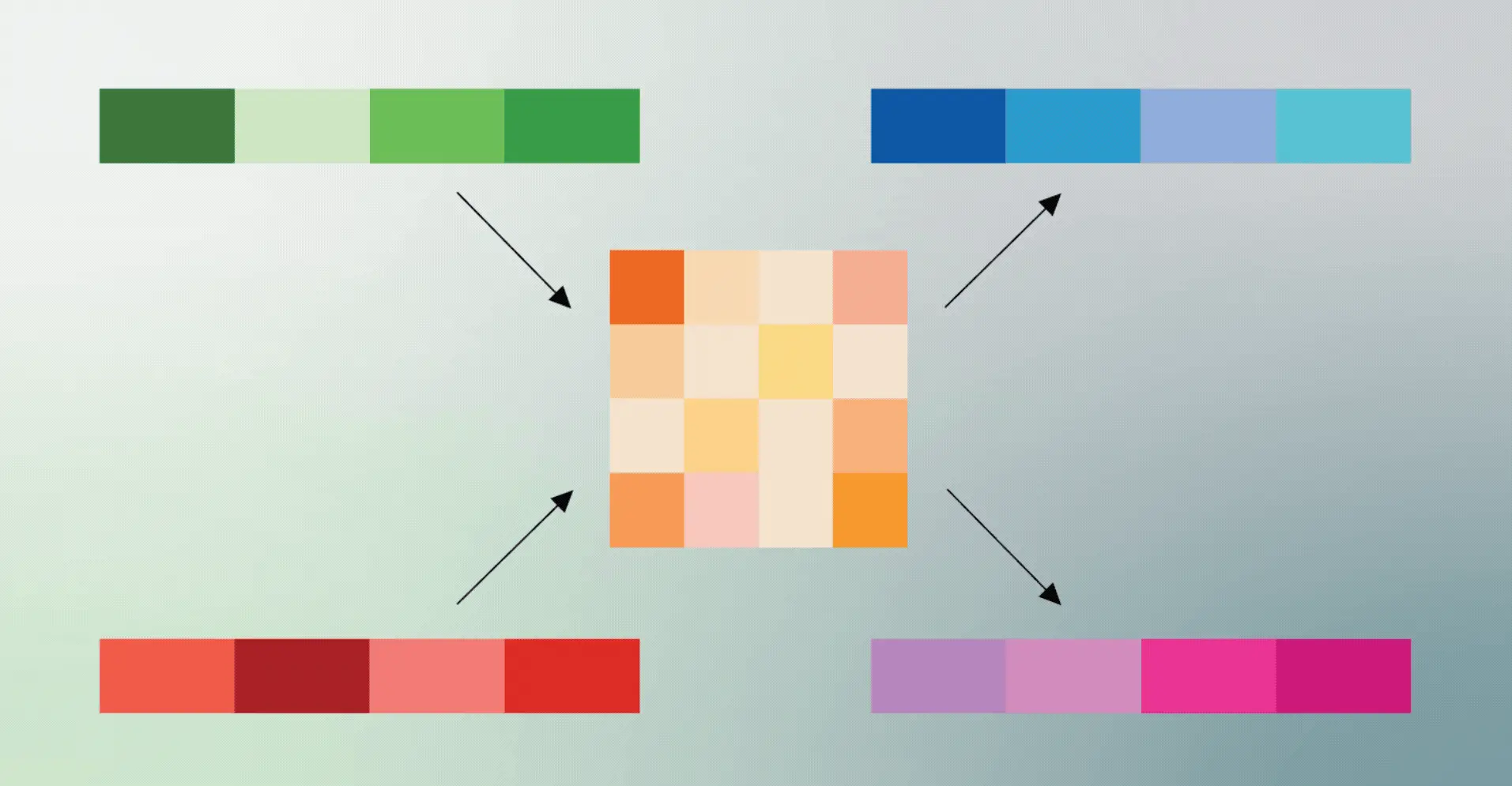
Google Research published something significant on March 24, 2026. The announcement was understated, buried in a research blog post with a GIF of colored squares. But 11.9 million views on the tweet in under 24 hours suggests the AI community understood immediately what this actually means.
TurboQuant is a compression algorithm that shrinks the memory footprint of large language models by at least 6x and speeds up inference by up to 8x, with provably zero accuracy loss. No retraining. No calibration. No model-specific tuning.
Is it actually good? The honest answer is: it depends heavily on what you are using it for. Here is a complete breakdown based on the model card, community benchmarks, and independent tester feedback.
The Problem TurboQuant Solves
To understand why this matters, you need to understand the KV cache bottleneck.
When you chat with a large language model, the model does not just process your latest message in isolation. It keeps a running record of the entire conversation in memory, stored as mathematical structures called key-value pairs. This record is called the KV cache.
Every token the model has seen gets stored there. Attention is computed over all of them for every single new token generated. The longer the conversation, the bigger the cache, and the more memory it consumes.
For a 70-billion parameter model with 32,000 tokens of context, the KV cache alone consumes about 80 GB of GPU memory. That is not the model. That is just the scratch paper sitting next to it.
For cloud providers serving 512 concurrent users, the KV cache alone can require 512 GB of cache memory, nearly four times the memory needed for the model weights themselves.
Traditional quantization tries to fix this by compressing those cached vectors. The persistent limitation: most methods introduce their own memory overhead. Every small block of compressed data requires quantization constants stored at high precision alongside it. The compression saves memory on one side and spends it on the other.
TurboQuant addresses this by combining two underlying methods. PolarQuant handles the primary compression step by converting standard Cartesian coordinate vectors into polar coordinates. QJL handles the residual error using the Johnson-Lindenstrauss Transform, reducing each remaining vector value to a single sign bit with zero memory overhead.
How TurboQuant Actually Works
TurboQuant compresses the KV cache through two sequential stages.
Stage 1: PolarQuant (the compression step)
PolarQuant maps pairs of coordinates to a polar system, expressing them as a radius and an angle. Because the angular distribution is predictable and concentrated, the method eliminates the normalization step and the overhead costs it generates.
In plain terms: instead of recording where a point is along each axis independently, PolarQuant records the angle and distance from the origin. The angle is far more compressible than raw axis coordinates because it follows a predictable statistical pattern in high-dimensional spaces.
Stage 2: QJL (the error correction step)
To correct bias when estimating inner products, Google Research developed TURBOQUANTprod, a two-stage approach. The MSE stage applies a TURBOQUANTmse quantizer using a bit-width of b-1 to minimize the L2 norm of the residual vector. The unbiased stage applies a 1-bit Quantized Johnson-Lindenstrauss transform to the residual vector, resulting in an overall bit-width of b while providing a provably unbiased estimator for inner products.
The key insight is the word "provably." This is not an empirical observation or a lucky benchmark result. The unbiasedness of the inner product estimator follows from the mathematics of the Johnson-Lindenstrauss transform. The algorithm cannot introduce systematic error into attention scores by construction.
The result:
TurboQuant proved it can quantize the key-value cache to just 3 bits without requiring training or fine-tuning and causing any compromise in model accuracy, all while achieving a faster runtime than the original LLMs.
The Benchmark Results
Google evaluated TurboQuant across five standard long-context benchmarks: LongBench, Needle In A Haystack, ZeroSCROLLS, RULER, and L-Eval, using Gemma, Mistral, and Llama-3.1-8B-Instruct.
Memory reduction: Memory reduction reached at least 6x relative to uncompressed KV storage.
Speed improvement: On NVIDIA H100 GPUs, 4-bit TurboQuant delivered up to an 8x speedup in computing attention logits over 32-bit unquantized keys.
Accuracy: TurboQuant achieved 100% retrieval accuracy on the Needle-In-A-Haystack benchmark up to 104,000 tokens, matching full-precision performance exactly. Even at extreme compression down to 3 bits, the perplexity change was less than 0.5% for models like Llama 3 and Mistral.
Vector search: Evaluated against Product Quantization and RabbiQ on the GloVe dataset, TurboQuant achieved the highest 1@k recall ratios despite those baselines relying on larger codebooks and dataset-specific tuning.
Against the existing best: TurboQuant outperformed KIVI and RabbiQ across all benchmarks. Jumping from KIVI's 2.6x compression to TurboQuant's 6x represents a generational improvement.
What This Means in Practical Terms
The numbers are easier to understand with concrete examples.
Context window capacity: For a 32,000-token context, the KV cache drops from 12 GB to about 2 GB. This means a GPU that previously maxed out at a 32K context window can now support roughly a 200K context window on the same hardware.
Cost reduction at scale: Running Llama 3 70B in full precision requires about 140 GB of memory. On cloud GPUs, that is roughly 3,000 dollars per month. With 4-bit TurboQuant compression, that same model fits on a single A100, cutting costs to about 750 dollars per month.
Preprocessing time: For vector databases, TurboQuant reduces indexing time to virtually zero, for example 0.0013 seconds for 1536-dimensional vectors, while consistently outperforming traditional PQ in search recall.
No data required: Unlike standard Product Quantization, TurboQuant is data-oblivious and works instantly without needing time-consuming k-means training on your specific dataset.
The Honest Limitations
TurboQuant is a research result, not a product. Several genuine limitations are worth understanding before treating this as a solved problem.
Model size coverage is narrow. The published results cover Gemma, Mistral, and Llama-3.1-8B-Instruct. These are small models. Whether TurboQuant's zero accuracy loss claim holds on 70B+ models, mixture-of-experts architectures, or models with 1M token context windows remains undemonstrated.
The 8x speedup is not end-to-end. The 8x speedup specifically measures attention logit computation (4-bit TurboQuant vs 32-bit unquantized keys on H100). This is not 8x end-to-end inference speedup. Attention is a significant but not sole bottleneck and the actual wall-clock improvement for full inference will be lower.
No official code exists yet. The paper demonstrates the algorithm. It does not ship an inference framework, a CUDA kernel, or integration with vLLM, TensorRT-LLM, or SGLang. Open-source code is widely expected around Q2 2026.
TurboQuant vs Nvidia KVTC: The ICLR 2026 Showdown
TurboQuant is not the only major KV cache compression result being presented at ICLR 2026 in late April.
Nvidia's KVTC achieves 20x compression with less than 1 percentage point accuracy penalty, tested on models from 1.5B to 70B parameters, a wider range than TurboQuant's benchmarks on models up to roughly 8B. It's a significant development for frontier models, much like the recent Qwen3.5-27B Claude Opus Reasoning Distilled community fine-tune which also targets high-end reasoning on local hardware. KVTC takes a fundamentally different approach, using PCA-based decorrelation and entropy coding that borrows concepts from JPEG compression. Unlike TurboQuant's data-oblivious design, KVTC requires a one-time calibration step per model to compute a PCA alignment matrix offline.
The tradeoffs are clear:
| TurboQuant | Nvidia KVTC | |
|---|---|---|
| Compression ratio | 6x | 20x |
| Accuracy loss | Zero (provable) | Less than 1% |
| Calibration required | None | One-time per model |
| Largest tested model | ~8B | 70B |
| Production integration | Community only | Nvidia Dynamo / vLLM |
For cloud providers and LLM operators, the choice depends on deployment constraints. TurboQuant offers simplicity with no calibration and a mathematically proven distortion bound, while KVTC delivers substantially greater raw compression at 20x versus 6x, validated across a broader model size range.
Community Implementations (Before Official Code)
Despite Google not releasing code, the community has not waited.
Independent developers have already built working implementations in Triton, MLX, and llama.cpp despite no official code release from Google. A PyTorch implementation has also been published independently.
The Apple Silicon MLX version is particularly notable. It makes TurboQuant-style KV compression accessible on Mac hardware, which is already a popular platform for running local LLMs. The math is clean enough that developers could reproduce the core algorithm from the paper alone.
What Happens Next
Techniques like TurboQuant are critical for Google's mission. They allow for building and querying large vector indices with minimal memory, near-zero preprocessing time, and state-of-the-art accuracy. This makes semantic search at Google's scale faster and more efficient.
The immediate timeline:
- Q2 2026: Official open-source code expected from Google Research
- Late April 2026: Formal ICLR 2026 presentation with full paper and Q&A
- Ongoing: Community implementations in vLLM, llama.cpp, and MLX maturing in parallel
The broader implication is about what becomes possible when memory stops being the bottleneck. Long-context inference, which today requires expensive infrastructure reservations or per-request fees, starts looking like a default feature. Models that currently require multi-GPU setups begin fitting on a single card. Edge deployment for 7B to 13B models on consumer hardware becomes meaningfully more practical.
The AI industry loves a big number: trillion-parameter models, million-token context windows, massive GPU clusters that cost more than most houses. TurboQuant is about the opposite of that. It is about the same capability for a fraction of the cost, and that is a different kind of important.
Sources and Further Reading
- Google Research blog: TurboQuant - Official announcement and benchmark charts
- Tom's Hardware coverage - Hardware and benchmark context
- TurboQuant technical reference site - Community implementation details and pseudocode
- MarkTechPost technical breakdown - Math and algorithm detail
- Winbuzzer: TurboQuant vs KVTC comparison - Nvidia KVTC comparison and production context
Published: March 26, 2026. TurboQuant will be presented at ICLR 2026 in late April. Official code is expected around Q2 2026. All benchmark figures are from Google Research's published evaluation.
Frequently Asked Questions
What is Google TurboQuant?
TurboQuant is a compression algorithm developed by Google Research that reduces the key-value (KV) cache memory in large language models by at least 6x and speeds up attention computation by up to 8x, with zero accuracy loss. It requires no training, no fine-tuning, and no calibration data. The paper will be presented at ICLR 2026 in late April.
What is a KV cache and why does it matter?
The key-value cache is the memory an LLM uses to store its running record of a conversation. Every token the model has processed gets stored as key-value pairs, and attention is computed over all of them for every new token generated. For a 70-billion parameter model handling a 32,000-token context, the KV cache alone can consume 80 GB of GPU memory. TurboQuant reduces that to roughly 13 GB.
Does TurboQuant require retraining or fine-tuning?
No. TurboQuant is data-oblivious, meaning it works the same way regardless of which model or dataset you apply it to. There is no calibration step, no training required, and no model-specific tuning. This makes it drop-in compatible with any transformer-based model.
Is TurboQuant available to use right now?
Google has not released official code. However, independent developers have already built working implementations from the published math, including versions in PyTorch, MLX (Apple Silicon), Triton, and llama.cpp. Official open-source code is expected around Q2 2026.
How does TurboQuant compare to Nvidia KVTC?
Both are being presented at ICLR 2026. TurboQuant achieves 6x compression with zero accuracy loss and no calibration required. Nvidia KVTC achieves 20x compression with less than 1 percentage point accuracy penalty, but requires a one-time PCA calibration step per model. KVTC has also been tested on models up to 70B parameters, while TurboQuant's published benchmarks top out at around 8B parameters.
What models has TurboQuant been tested on?
Google's published benchmarks cover Gemma, Mistral, and Llama-3.1-8B-Instruct. All tested models are in the 7B to 8B parameter range. Performance on larger models such as 70B or 405B has not been published. This is the most significant open question about real-world applicability at scale.
What is the real-world cost impact of TurboQuant?
For a 70B parameter model serving 512 concurrent users, the KV cache alone can require 512 GB of GPU memory. TurboQuant would reduce that to roughly 85 GB. In cloud terms, running Llama 3 70B in full precision costs around 3,000 dollars per month. With 4-bit TurboQuant, the same model fits on a single A100, cutting costs to approximately 750 dollars per month.
Renovate QR Newsletter
Stay sharp on AI & tech
Our best reviews, comparisons, and guides — delivered weekly. No noise, no spam.