Best AI Smart Glasses in 2026: ChatGPT, Meta AI, and the Assistants on Your Face
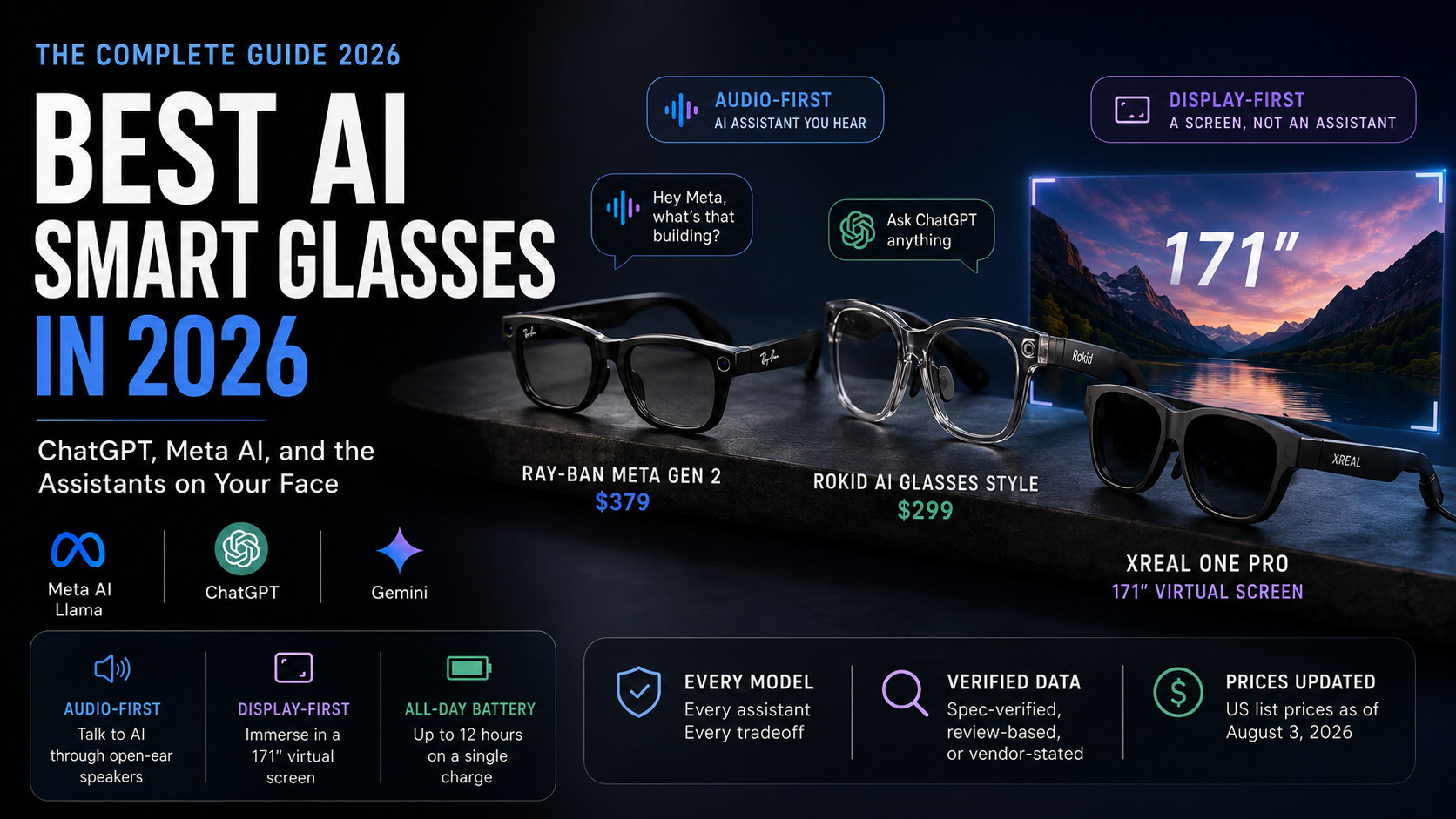
The complete AI smart glasses guide for 2026. Audio-first pairs like the Ray-Ban Meta Gen 2 and the Rokid AI Glasses Style put ChatGPT and Meta AI on your face for $299, while display-first options like the XREAL One Pro replace your monitor. Every model, every assistant, every tradeoff, explained.
TL;DR
AI glasses in 2026 divide into two camps. Audio-first glasses, led by the Ray-Ban Meta Gen 2 and the Rokid AI Glasses Style, carry an assistant you talk to through open-ear speakers, no display. Display-first glasses like the XREAL One Pro and 1S are portable screens strapped to your face, no assistant at all. The two solve completely different problems.
The Ray-Ban Meta Gen 2 at $379 is the default pick for most people. It looks like normal Wayfarers, runs Meta AI on Meta's Llama model family, translates in more than 20 languages, records 3K video, and lasts up to 8 hours claimed, with a charging case that adds roughly 48 hours. The honest caveat: AI responses still take 3 to 5 seconds, and the camera struggles in low light.
The Rokid AI Glasses Style matches the Ray-Ban's $299 list price and undercuts it on battery, with a claimed 12 hours, while routing its assistant through ChatGPT and Gemini and translating in 89 languages online. The catch: no charging case is included, and the camera sits off-center on the left arm.
The XREAL One Pro and 1S are the best display glasses on the market, projecting a 171 inch virtual screen through 57 and 52 degree fields of view, but they contain no AI assistant and no camera. They are powered by your phone or laptop over a USB-C cable. Buy them to replace a monitor, not to get an assistant.
We have not hands-on tested every unit in this guide. Each product is flagged as spec-verified, published-review based, or vendor-stated, per our standard disclosure practice. Prices are list prices as of August 3, 2026 and fluctuate on Amazon.
Best AI Smart Glasses in 2026: ChatGPT, Meta AI, and the Assistants on Your Face
Six months ago, AI smart glasses were a bet on the future. In 2026, the future arrived with a price tag. The Ray-Ban Meta Gen 2 ships with Meta AI built on Meta's Llama model family, the Rokid AI Glasses Style routes its assistant through ChatGPT and Google Gemini, and display-first pairs like the XREAL One Pro project a 171 inch virtual screen from a frame that weighs 87 grams. The market has split into two distinct camps, audio-first and display-first, and the choice between them matters more than any individual spec.
This guide covers every pair worth buying in 2026, the assistant inside each one, what is verified versus vendor-stated, and who should actually buy what. It is written to inform first. Buying links are at the bottom of each section, not the top, and we flag every compromise as clearly as every strength.
Want the software side of this story? See our complete breakdown of the models behind these assistants, including AI Models in August 2026, or compare every model side by side on the AI Model Intelligence Index.
How We Picked
The first decision is not which glasses to buy. It is which category you need.
Audio-first glasses are sunglasses with a camera, open-ear speakers, and an AI assistant you talk to. You hear the assistant through speakers in the temples, and you see nothing on the lenses. They look like normal glasses, weigh 45 to 53 grams, and last a full day. This category includes the Ray-Ban Meta Gen 2, the Rokid AI Glasses Style, and the Oakley Meta HSTN.
Display-first glasses are portable monitors. They project a virtual screen in front of your eyes through micro-OLED panels, connect over a USB-C cable, and take their power from the connected device. They have no camera, no microphones, and no assistant. This category includes the XREAL One Pro, the XREAL 1S, and the RayNeo Air 4 Pro.
We evaluated both categories against the criteria that matter for a wearable you are supposed to forget you are wearing: weight, battery life, camera quality, assistant capability, and price. Prices below are US list prices as of August 3, 2026, confirmed across manufacturer pages and multiple independent reviews. Amazon prices fluctuate daily, sometimes substantially, and lens and frame configurations change the price on every model in this list.
A note on testing status, and it is important. We have not hands-on tested every unit in this guide. For each product below we flag whether the data comes from manufacturer specifications, which we label vendor-stated, or from multiple independent published reviews, which we label review-verified. Battery life claims in particular should be treated as vendor-stated ceilings; real-world reviews consistently report less.
The Shortlist at a Glance
| Product | Type | AI Assistant | Battery (vendor-stated) | List price | Link |
|---|---|---|---|---|---|
| Ray-Ban Meta Gen 2 | Audio-first | Meta AI (Llama) | 8 hours | $379 | View on Amazon |
| Rokid AI Glasses Style | Audio-first | ChatGPT + Gemini | 12 hours | $299 | View on Amazon |
| XREAL One Pro | Display-first | None | No battery (USB-C) | $599 | View on Amazon |
| XREAL 1S | Display-first | None | No battery (USB-C) | $449 | View on Amazon |
| Oakley Meta HSTN | Audio-first | Meta AI (Llama) | 8 hours | $399 | View on Amazon |
| RayNeo Air 4 Pro | Display-first | None | No battery (USB-C) | $299 | View on Amazon |
A note on how to read this table. The display-first rows have no assistant column entries because they genuinely have none, and no battery because they draw power from the device they plug into. That is not an omission on our part. It is the core difference between the two categories, and it drives most of the buying decision.
Affiliate disclosure: Some links in this article are affiliate links. If you buy through them we may earn a commission at no extra cost to you. See our affiliate disclosure. Prices are list prices as of August 3, 2026 and can change at any time.
Ray-Ban Meta Gen 2: Best Overall
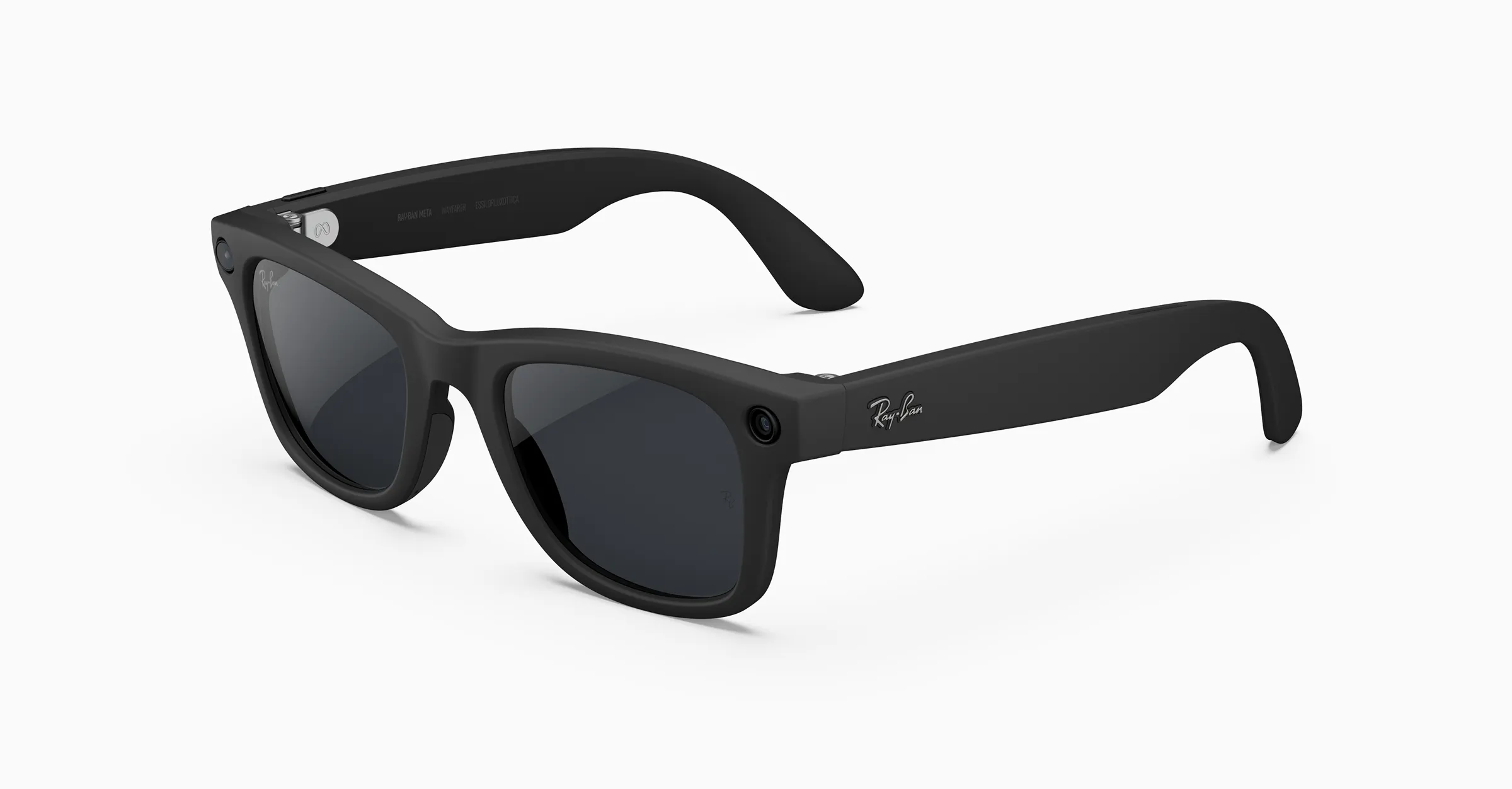
The Ray-Ban Meta Gen 2 is the pair every other audio-first glasses company is chasing, and for good reason. It is a real Ray-Ban Wayfarer, Headliner, or Skyler with a 12MP camera in the right hinge, open-ear speakers in the temples, and Meta AI built in. At roughly 50 grams it weighs about five more than a normal pair of Ray-Bans, which is undetectable in practice.
The AI is the story. Meta AI, which Meta builds on its Llama model family, answers questions, reads signs through the camera with the Look and Ask feature, and translates speech in more than 20 languages. You invoke it with the phrase "Hey Meta" and a tap on the frame edge. The assistant also integrates with WhatsApp and Messenger for hands-free messages, a genuinely useful daily loop that no competitor matches. Review-verified: the 12MP camera shoots 3,024 by 4,032 stills and 3K video at 30fps, or 1080p at 60fps, with 32GB of storage and a 100 degree field of view.
Battery is the honest weak point. Meta claims up to 8 hours of typical use, and Android Central measured roughly 5 hours of continuous music, while PCMag's heavy-use music test hit 15% battery at 3 hours 20 minutes. The charging case, which adds about eight full charges and reaches 50% in 20 minutes, is the mitigation, and it is included. Review-verified: continuous video drains the glasses in roughly 30 minutes.
The honest caveats matter here. AI responses still take 3 to 5 seconds per hands-on 2026 reviews, which feels slow against phone-based assistants. The camera is mediocre in low light, framing is guesswork because there is no viewfinder, and the open-ear speakers leak sound to the people next to you. Privacy-conscious buyers should know that everything the camera and microphones capture flows through Meta's services.
Who it is for: anyone who wants the best all-around audio-first assistant glasses and does not mind the Meta ecosystem. Who it is not for: people who want a screen, people who need better than 5 hours of continuous use, and people who will not trust Meta with their camera feed.
Check the Ray-Ban Meta Gen 2 price on Amazon
Rokid AI Glasses Style: Best Value and Battery
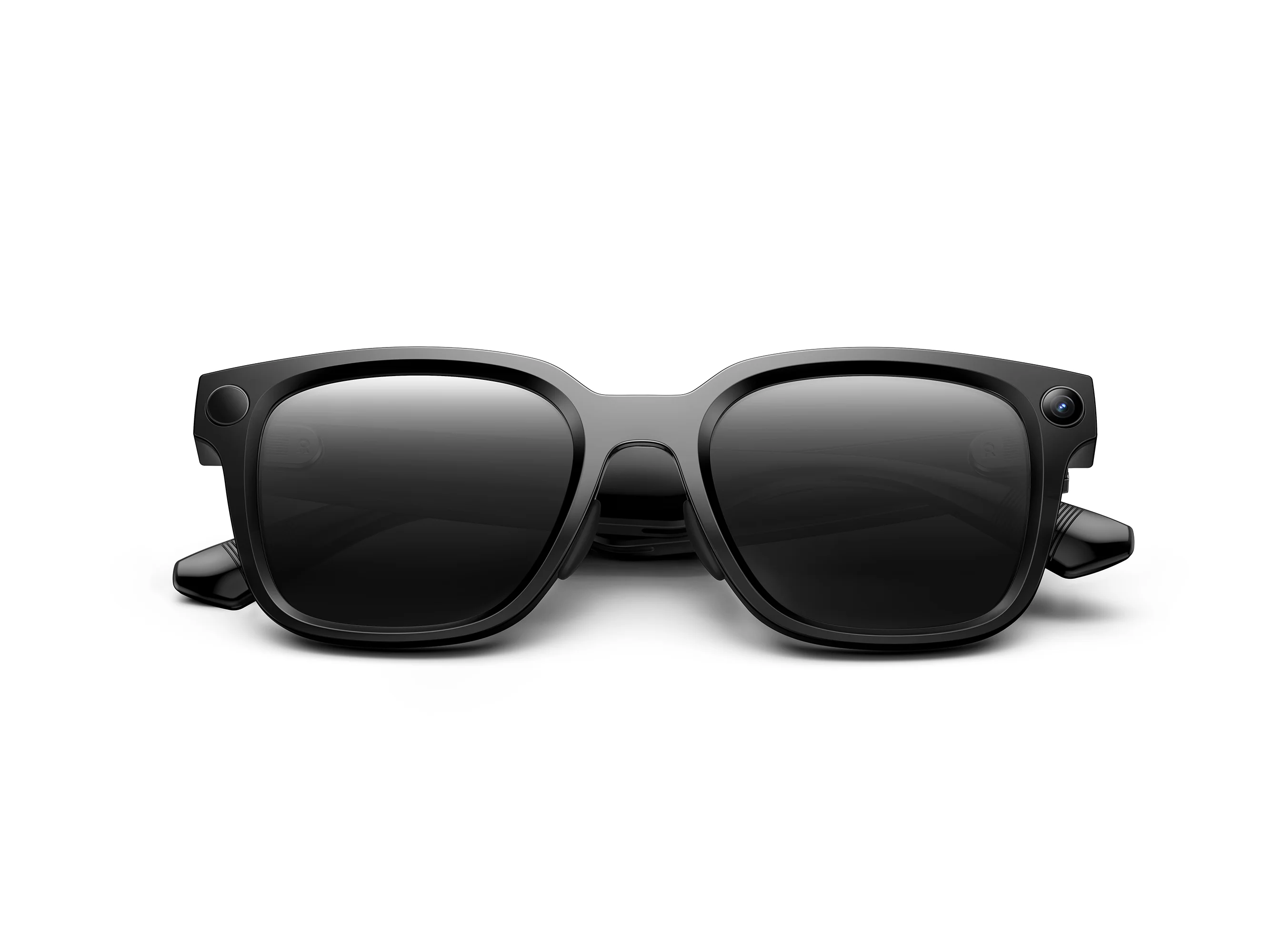
The Rokid AI Glasses Style is the most serious Ray-Ban challenger on the market, and it wins on two specific fronts: battery and assistant flexibility.
The assistant is the differentiator. Rokid's glasses route voice interactions through a combination of ChatGPT and Google Gemini, with the model selectable in the Hi Rokid companion app, and Rokid does not publish exact model versions. Multiple reviews describe the experience as ChatGPT-5 class behavior, but treat the specific model version as vendor-stated. The translation feature covers 89 languages online and 6 offline, a genuine edge over Meta's 20 plus. The 12MP Sony IMX681 camera matches the Ray-Ban on resolution, shooting 3,024 by 4,032 stills and 3K video, with one quirk: the camera sits on the left edge of the frame, so first-person shots are off-center, and there is no image stabilization.
Battery is where Rokid leads the category. The 210mAh cell is rated for 12 hours of typical use, and Gizmodo's week-long test corroborated the claim, seeing only 15% drain over hours of intermittent use. The splits matter though: about 6 hours of music, roughly 2 hours of translation, and only 40 to 45 minutes of continuous video, all review-verified. Real-world weight is 45 grams with lenses, despite the headline 38.5 gram figure, which Rokid quotes for the frame without lenses, a caveat Gizmodo and Notebookcheck both confirmed by weighing units themselves.
The honest caveats matter here. There is no charging case in the box, a $99 to $129 extra depending on whether you pick the power capsule or the charging case, and that omission is the single biggest argument against this pair. The companion app is jankier than Meta's, especially on Android, and the AI assistant is hit or miss depending on the task. The off-center camera and photo capture delay are both review-verified annoyances.
Who it is for: travelers, people who need 12 hours of battery, and buyers who want ChatGPT and Gemini on their face instead of Meta AI. Who it is not for: people who will not carry a charging dongle, and people who want centered, stabilized POV shots.
Check the Rokid AI Glasses Style price on Amazon
XREAL One Pro: Best Display
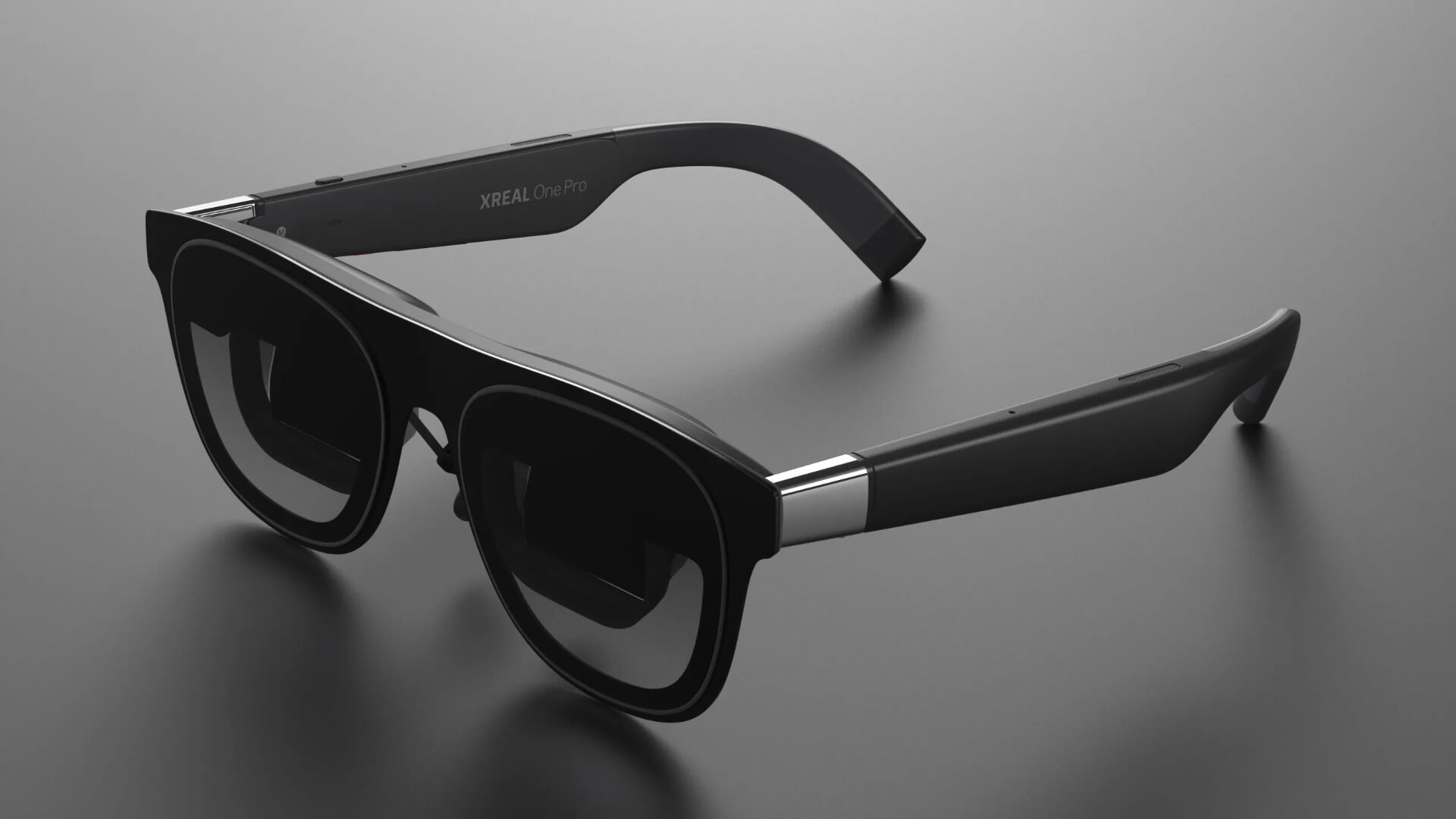
The XREAL One Pro is the best display glass that money can buy in 2026, and it is a fundamentally different product from the audio-first pairs above. It projects a 171 inch virtual screen through a 57 degree field of view, the widest in the consumer category, using dual 0.55 inch Sony micro-OLED panels at 1080p per eye, 120Hz, and 700 nits of perceived brightness. An ultrawide mode stretches the screen to 310 inches.
The X1 spatial chip is the story. XREAL built its own processor into the frame, which delivers a 3 millisecond motion-to-photon latency, review-verified across multiple outlets, and native three degrees of freedom tracking with no app and no phone processing required. Plug in a USB-C cable and the screen is anchored in space in front of you. The glasses come in two IPD sizes, medium covering 57 to 66 millimeters and large covering 66 to 75, and XREAL permanently cut the price from $649 to $599 earlier this year.
The honest caveats matter here. There is no battery, so the host device pays the cost: a Steam Deck drops to 4 to 5 hours of runtime, and phones drain noticeably faster. There is no camera included either, the XREAL Eye accessory that adds one is sold separately. The cable tether is a constant physical presence, and at 87 grams these are heavy enough that long sessions demand good nose pads. Reviews praise the Bose-tuned audio but note it is not the point.
Who it is for: commuters, frequent flyers, developers who want a second monitor anywhere, and people who want a private cinema on a plane. Who it is not for: anyone expecting an AI assistant, anyone who wants hands-free wireless use, and anyone who cannot abide a cable.
Check the XREAL One Pro price on Amazon
XREAL 1S: Best Value Display
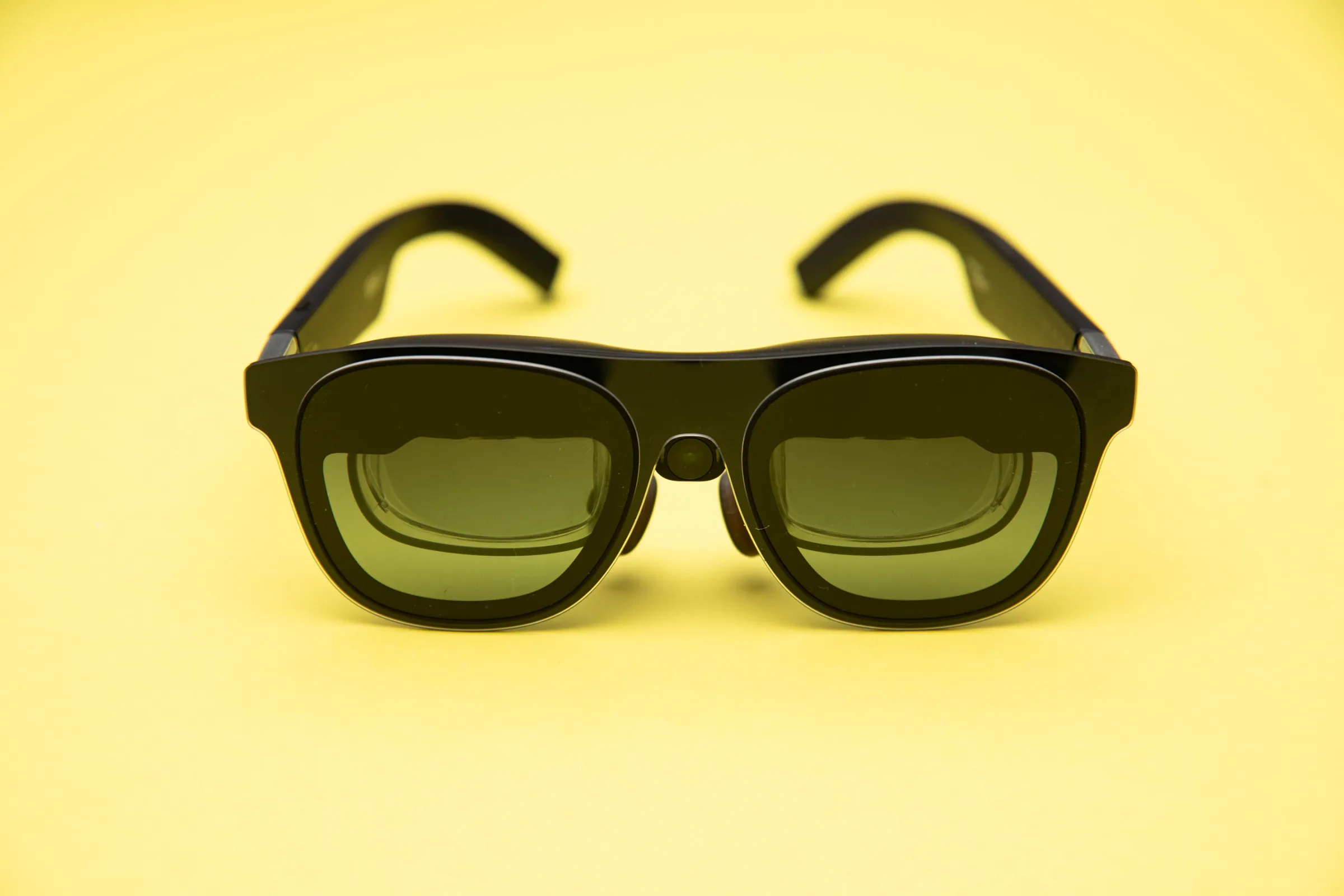
The XREAL 1S is the same story as the One Pro at a lower price, and for most buyers it is the better deal. It launched at CES in January 2026 at $449, undercutting the One Pro by $150 while keeping the same X1 chip and most of the experience.
The display steps up to 1,920 by 1,200 per eye at a 16:10 aspect ratio, the vertical space being the productivity upgrade over the One Pro's 16:9, with 120Hz, 700 nits, and a 52 degree field of view. The headline feature is Real 3D, an on-device 2D to 3D conversion that works on any content with no apps and no DRM restrictions, powered entirely by the X1 chip. Reviews call it surprisingly effective on video, though frame rate drops to 30fps while it is active, which rules out fast gaming.
The honest caveats matter here. The birdbath optics create visible reflections, and the edges of the image can blur, both review-verified. Real 3D makes the frame heat up noticeably. There is no battery, so host device drain is the same story as the One Pro, and at 82 to 85 grams it is on the heavy side, offset by three-position arms and three sizes of nose pads.
Who it is for: handheld gamers, movie watchers, and anyone who wants a 171 inch screen on a plane without paying flagship money. Who it is not for: people who want the widest field of view, and people who need the absolute sharpest edges.
Check the XREAL 1S price on Amazon
Oakley Meta HSTN: Best for Sports and Outdoors
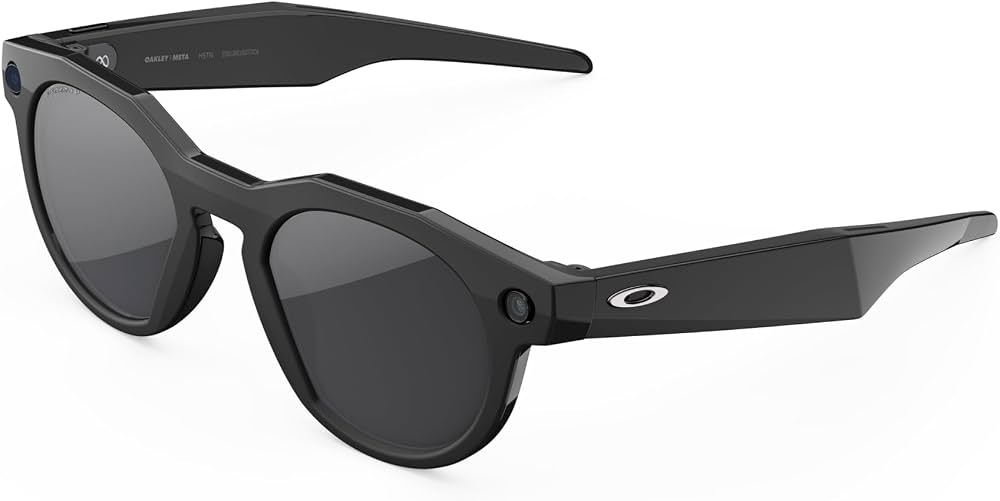
The Oakley Meta HSTN is the Ray-Ban Meta Gen 2 in a sports uniform. The hardware is nearly identical, same Snapdragon AR1 Gen 1 chip, same 12MP camera, same 3K video, same 32GB storage, same Meta AI, but the frame tells the real story. Straight temple arms hug the head for a secure fit during running, cycling, and gym sessions, Prizm lenses sharpen colors for outdoor use, and the whole thing carries an IPX4 rating for sweat and light rain. The Hindu's review, which tested it against the Wayfarer Gen 2 side by side, calls the secure fit the decisive difference.
The specs match the Ray-Ban: 8 hours claimed battery with the case adding roughly two more days, 12MP stills at 3,024 by 4,032, video at 3K 30fps or 1080p 60fps, and 53 grams on the face. Real-world battery came in around 6 hours in 91mobiles' testing, and PCMag's heavy-use test hit 4 hours before the 15% warning, slightly better than the Ray-Ban under the same load. Meta's AI features, Look and Ask, translation, and hands-free messages, are identical to the Ray-Ban because they are the same assistant.
The honest caveats matter here. It costs $399, $80 more than the Ray-Ban Gen 2, for a frame swap. Shooting is portrait orientation only, there is no landscape mode in the settings, and framing is still guesswork without a viewfinder. Digital Camera World, which reviewed it in May, describes the low-light camera performance as the weakest link, the same as the Ray-Ban.
Who it is for: athletes, hikers, cyclists, and anyone who needs glasses that stay put during movement. Who it is not for: people who do not need the sporty frame, because the Ray-Ban Gen 2 does everything else identically for less.
Check the Oakley Meta HSTN price on Amazon
RayNeo Air 4 Pro: Best Budget Display
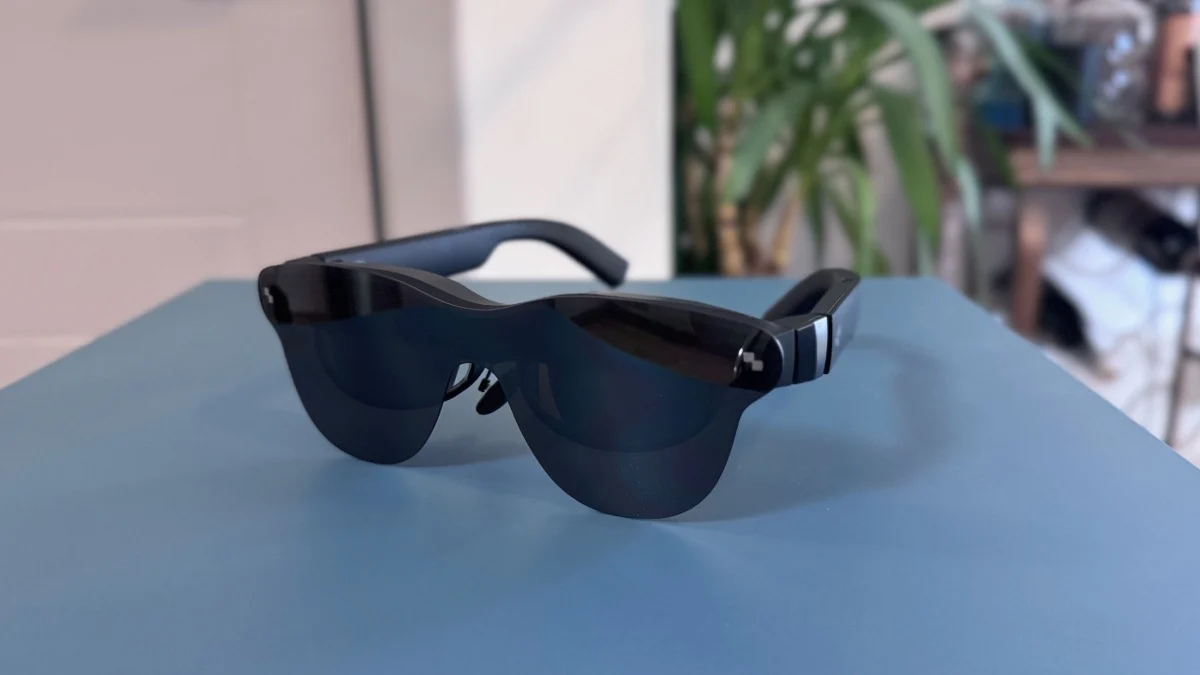
The RayNeo Air 4 Pro is the best entry point into display glasses, and it brings one first to the category: HDR10 support, at a $299 list price. The Vision 4000 image processor drives 1080p micro-OLED panels at 120Hz and 1,200 nits of peak brightness, with an AI-HDR mode that upscales standard content, plus Bang & Olufsen tuned speakers. At 76 grams with no battery, powered entirely over USB-C, it is the lightest display pair in this guide, and Tom's Guide called it the best way to binge HDR content on your face for the money.
The honest caveats matter here, and there are more of them than on the XREAL pairs. There is no head tracking, so the screen is fixed in the center of your field of view with no anchoring and no ultrawide mode. There is no IPD adjustment, so fit is luck of the draw, and the edges of the image blur at larger screen sizes, both review-verified. The build quality is visibly cheaper plastic, the phone battery drains fast, and Android HDR10 support is inconsistent: PCMag's testing found HDR10 output missing entirely on a Pixel 8.
Who it is for: first-time display glass buyers, budget travelers, and anyone who wants a big screen on a flight without spending $450. Who it is not for: people who need screen anchoring, ultrawide modes, or 3D conversion, where the XREAL 1S justifies its extra $150.
Check the RayNeo Air 4 Pro price on Amazon
The AI Inside Your Glasses: ChatGPT, Meta AI, and Gemini
The assistant is the reason these glasses exist, and in 2026 the assistant is a model you already know.
Meta AI powers the Ray-Ban Meta Gen 2 and the Oakley Meta HSTN. Meta builds it on its Llama model family, and in glasses form it does three things well: vision Q&A through the camera, speech translation in more than 20 languages, and hands-free messaging through WhatsApp and Messenger. The limits are latency, 3 to 5 seconds per query in current hardware, and the fact that your camera feed and audio flow through Meta's services. If you want to know how Llama compares to the frontier, our AI Models in August 2026 guide has the full benchmark picture.
ChatGPT and Gemini power the Rokid AI Glasses Style, selectable in the app. Rokid does not publish the exact model versions, so treat specifics as vendor-stated, but the practical capability is real: 89 languages of translation online, vision questions through the camera, reminders, and turn-by-turn navigation spoken through the open-ear speakers. The flexibility to pick your model provider is genuinely unique in this category in 2026. For the full picture on how ChatGPT and Gemini compare today, see our ChatGPT review and our Gemini review.
The display-first pairs have no assistant at all. The XREAL and RayNeo glasses are pure displays. You connect them to a phone that runs your assistant of choice, which is fine, but the glasses themselves add nothing to the AI experience. If the assistant is the point, buy audio-first. If the screen is the point, buy display-first. This is the single most useful mental model in the entire category.
Audio-First or Display-First: Which One Are You
The decision framework that settles most purchases.
- You want an assistant, translation, and hands-free photos: audio-first, and specifically the Ray-Ban Meta Gen 2 or the Rokid AI Glasses Style.
- You want a portable screen for movies, games, or a second monitor: display-first, and specifically the XREAL 1S at $449, with the RayNeo Air 4 Pro at $299 as the budget pick.
- You want both: you cannot have both in one product in 2026. The closest options are the XREAL One Pro with the optional XREAL Eye camera, which adds a camera but still no assistant, and the Meta Ray-Ban Display, which adds a HUD but costs roughly twice the Gen 2 and ships in limited configurations.
- You want the most natural wearing experience: audio-first. Sub-55 grams frames that pass as normal sunglasses will always beat an 80 plus gram display strapped to your nose for daily use.
What to Actually Buy Right Now
Practical guidance based on what is on the market and priced as of August 3, 2026.
For the best all-around AI assistant glasses for most people: the Ray-Ban Meta Gen 2 at $379. The most polished assistant, the best app ecosystem, and the only audio-first pair with an included charging case that makes the battery caveat livable.
For the best value and the longest battery: the Rokid AI Glasses Style at $299. ChatGPT and Gemini on your face, 12 hours claimed, 89 languages of translation, and 4 hours more battery than the Ray-Ban, if you can live with the missing charging case and the off-center camera.
For the best portable screen at any price: the XREAL One Pro at $599, with the widest field of view and the smoothest latency in the category. Most people should save $150 and take the XREAL 1S instead.
For a screen on a budget: the RayNeo Air 4 Pro at $299. HDR10, 1,200 nits, and 76 grams for half the price of the XREAL 1S, with real compromises on fit and head tracking.
For sports and outdoor use: the Oakley Meta HSTN at $399, if the secure fit and Prizm lenses justify $80 over the otherwise identical Ray-Ban Gen 2.
What Comes Next
The two biggest names in consumer hardware have announced glasses that are not here yet.
Google AI Glasses are expected in autumn 2026, with an in-lens display and Gemini, live translation captions, and navigation directions floating in the corner of your view. They are not yet available for purchase as of this writing, so we have not included them in the rankings, and availability timing is unconfirmed by Google.
Samsung has confirmed an Android XR glasses launch in 2026, built on Qualcomm silicon with deep Gemini integration, and Apple is targeting a 2027 release for its Project N50 glasses with a camera and microphone feature set matching the Ray-Ban Meta platform. Both are worth waiting for if you are not buying this quarter.
The pricing pattern is the more practical story. Every category above has seen its list price fall within a year of launch, the XREAL One Pro dropped $50 permanently, the RayNeo Air 4 Pro launched below its predecessor, and the Rokid Style sells at a $100 discount to its own MSRP. If you can wait, the fall launches will push prices down further.
Published August 3, 2026. Prices are list prices as of this date and change frequently on Amazon; we update this article as listings, pricing, and availability change. Affiliate disclosure: we may earn a commission on purchases made through the links in this article, at no cost to you. See our affiliate disclosure for details.
Frequently Asked Questions
What are the best AI smart glasses in 2026?
For audio-first assistants, the Ray-Ban Meta Gen 2 at $379 is the best overall pick, with the Rokid AI Glasses Style at $299 as the best value alternative. For display-first glasses, the XREAL One Pro at $599 is the best screen money can buy, and the XREAL 1S at $449 is the better value, with the RayNeo Air 4 Pro at $299 as the budget entry point.
Which smart glasses work with ChatGPT?
The Rokid AI Glasses Style works with ChatGPT, routing voice interactions through ChatGPT and Google Gemini, both selectable in the Hi Rokid companion app. Rokid does not publish the exact model versions, so specifics are vendor-stated. No other major 2026 glasses ship with ChatGPT as their assistant; the Ray-Ban Meta Gen 2 and the Oakley Meta HSTN use Meta AI, and the display-first XREAL and RayNeo pairs have no assistant at all.
Which smart glasses use Meta AI?
The Ray-Ban Meta Gen 2 and the Oakley Meta HSTN both run Meta AI, built on Meta's Llama model family, with vision Q&A through the camera, translation in more than 20 languages, and WhatsApp and Messenger integration. The two pairs share nearly identical hardware, differing mainly in frame design and price.
Are AI smart glasses worth buying in 2026?
Yes, for specific use cases. Audio-first glasses like the Ray-Ban Meta Gen 2 are worth it if you want hands-free photos, translation, and an always-available assistant, and if you accept 3 to 5 second AI latency and the privacy tradeoff of sending camera and audio data through Meta. Display-first glasses like the XREAL 1S are worth it if you travel, play handheld games, or want a second monitor anywhere. They are not worth it if you expect a screen and an assistant in the same product, which does not exist in 2026.
What is the difference between audio-first and display-first smart glasses?
Audio-first glasses have no display. They are sunglasses with a camera, open-ear speakers, and an AI assistant you talk to, weighing 45 to 53 grams. Display-first glasses are portable monitors that project a virtual screen through micro-OLED panels, have no camera or assistant, and take power from the connected device over a USB-C cable, weighing 76 to 87 grams.
When will Google AI Glasses be available?
Google AI Glasses are expected in autumn 2026 with an in-lens display and Gemini, but they are not yet available for purchase and Google has not confirmed exact availability. Samsung has also announced Android XR glasses for 2026, and Apple is targeting a 2027 release for its Project N50 glasses.
Renovate QR Newsletter
Stay sharp on AI & tech
Our best reviews, comparisons, and guides — delivered weekly. No noise, no spam.