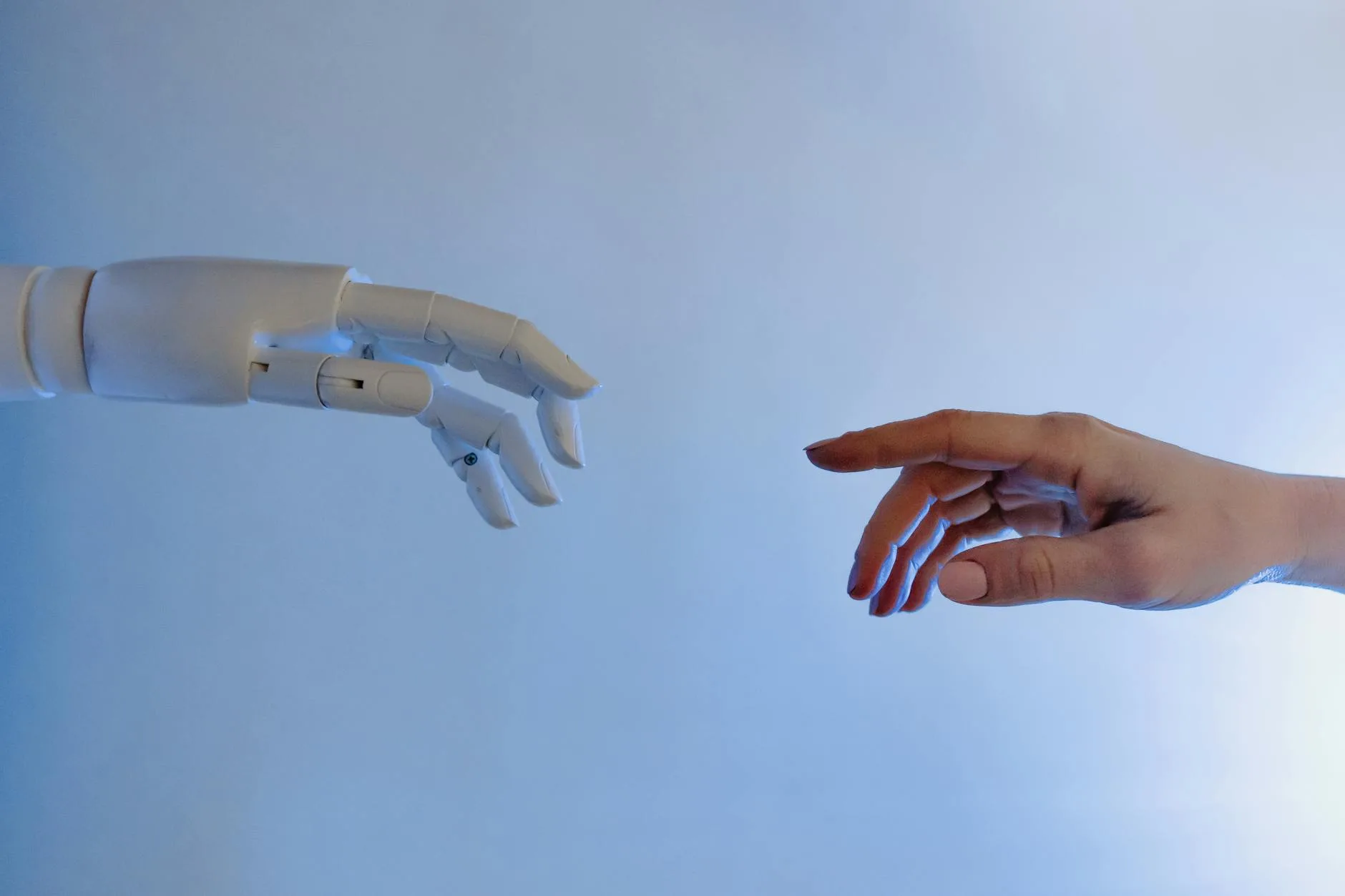
The Future of AI by 2030: 7 Bold Predictions
Agentic systems, physical AI, AGI debates, and sovereign infrastructure: seven predictions researchers are most confident about, and what they mean.

TL;DR
By 2030, 60%+ of enterprise software will include agentic capabilities. Interaction shifts from 'chat' to 'delegate goals'.
Robotics + AI breakthroughs by 2028-2030. Humanoid robots in warehouses, autonomous vehicles in select cities.
Optimists: 2-5 years (Amodei, Altman). Moderates: 5-10 years (Hassabis). Skeptics: decades or never (Marcus, LeCun).
Nations building domestic AI infrastructure. EU, China, India, Middle East investing billions to reduce dependence on US.
The Future of AI by 2030: 7 Predictions from Leading Researchers
In 2020, the idea that an AI system would soon write better code than most programmers, pass medical licensing exams, or autonomously complete multi-hour work tasks would have seemed wildly optimistic. By 2026, all of these things are routine.
The pace of progress has surprised even the most optimistic researchers. So what does the next four years look like?
This article pulls together the most credible, research-backed predictions for AI by 2030 - drawn from Stanford, MIT, Google DeepMind, Anthropic, the World Economic Forum, Gartner, and leading independent forecasters. Not hype, not science fiction: the directions that serious, data-driven analysts believe are most likely.
Prediction 1: Agentic AI Becomes the Default Mode of AI Interaction
The shift from chatbots to agents is already underway, and by 2030, interacting with an AI that just answers questions will feel as dated as using a command-line interface.
Gartner projects that by 2028, 33% of enterprise software applications will include agentic capabilities - AI that plans, executes, and iterates on tasks without requiring step-by-step human direction. By 2030, that figure is expected to exceed 60%.
The practical impact: by 2030, most people's daily interaction with AI won't involve typing questions into a chat window. It will involve delegating goals to AI agents and reviewing their work. Choosing a hotel, scheduling a complex project, researching a major purchase, managing a small business's finances - all of these will increasingly be handled by agents working on your behalf.
Jakob Nielsen, a leading UX researcher, frames this as a shift from "Conversational UI" to "Delegative UI": instead of asking AI what to do, you'll assign AI what to accomplish.
Prediction 2: Physical AI and Robotics Enter the Mainstream
For the past decade, the most impressive AI capabilities lived entirely in software - generating text, images, code, and analysis. By 2030, researchers expect a dramatic expansion into the physical world.
Google DeepMind CEO Demis Hassabis has publicly committed to establishing the company's first automated AI laboratory in 2026 - a research facility where AI agents run experiments autonomously. This is the starting gun for a broader trend.
Vision-language-action models - AI systems that can see, understand, and physically interact with their environment - are maturing fast. Autonomous warehouse robots, delivery drones, and surgical assistance systems that combine AI perception with physical action are moving from pilots to production deployments.
By 2030, independent analysts predict physical AI will be embedded in manufacturing, logistics, retail, agriculture, and healthcare at a scale that makes today's robotic deployments look like prototypes. The bottleneck isn't capability - it's the infrastructure, standards, and regulatory frameworks needed to deploy reliably in physical environments.
Prediction 3: The Knowledge Worker's Role Transforms Fundamentally
McKinsey estimates that AI could technically handle around 57% of current US work hours by 2030. But researchers are careful to distinguish between what AI can automate and what will actually be automated.
The more likely picture: routine cognitive tasks - data synthesis, drafting, scheduling, classification, analysis - are handled by AI, while human workers focus on judgment, strategy, relationship management, and creative problem-solving. The result isn't mass unemployment; it's a profound restructuring of what a day's work looks like.
Stanford economists predict that by 2026 and 2027, we'll see the emergence of AI economic dashboards - real-time tracking systems that measure, at the task and occupation level, where AI is boosting productivity, displacing workers, and creating new roles. This visibility will fundamentally change how policymakers, educators, and businesses respond to automation.
The skills that become most valuable by 2030: the ability to define goals precisely for AI systems, evaluate AI output critically, design human-AI workflows, and apply judgment in situations where AI cannot.
The World Economic Forum projects that 170 million new roles will be created globally by 2030 as a result of AI and related technology shifts - more than offsetting the 92 million displaced. But the transition will be uneven, and many of those new roles don't yet have clear job descriptions.
Prediction 4: Domain-Specific AI Models Overtake General-Purpose Models for High-Stakes Work
In 2026, the dominant story is about frontier general-purpose models - GPT-5, Gemini 3, Claude 4. By 2030, IBM's analysts and others predict the more important story will be vertical AI: smaller, domain-specific models trained on industry data.
These models already reduce error rates by 20-40% compared to general models in regulated sectors. A model trained specifically on clinical trial data, legal precedents, or financial regulations doesn't just know the domain - it knows the domain deeply, and its outputs are calibrated to the standards that sector demands.
By 2030, most high-stakes AI deployments in healthcare, law, finance, and manufacturing will run on specialised models - often smaller and cheaper than frontier models, but dramatically more accurate and reliable for specific tasks. The frontier general models will handle the generalist work; the vertical models will handle the precision work.
Prediction 5: Sovereign AI Becomes a National Security Priority
In 2026, Gartner projects that 35% of countries will be locked into region-specific AI platforms by 2027. By 2030, AI infrastructure - the data centres, compute clusters, and AI systems underpinning critical government and economic functions - will be treated as sovereign assets, like electrical grids or financial systems.
Several forces are driving this:
- Governments don't want core public services dependent on AI systems controlled by foreign corporations
- Data privacy regulations increasingly require certain data to remain within national borders
- AI is increasingly embedded in defence, intelligence, and public safety applications
- Major economies - the EU, China, India, and others - are investing in domestic AI infrastructure to reduce dependence on US platforms
This doesn't mean a fragmented internet. It means that AI services will increasingly look different depending on where you are, reflecting local data laws, values, and governance frameworks. For global businesses, managing this fragmentation is becoming a strategic challenge comparable to managing different tax regimes.
Prediction 6: AI Becomes a Primary Engine of Scientific Discovery
This is the prediction that excites researchers most, and where the potential implications for humanity are largest.
In 2026, AI is already accelerating scientific research in protein folding, drug discovery, materials science, and climate modelling in ways that would have taken decades using traditional methods. By 2030, researchers expect AI to move from supporting human scientists to leading scientific inquiry in specific domains.
Google DeepMind has committed to the first autonomous AI research laboratory in 2026. OpenAI has set a goal of developing an "intern-level AI research assistant" by late 2026 and a "legitimate AI researcher" by 2028 - an AI that can generate research questions, design experiments, analyse results, and propose new hypotheses without human direction.
The implications go far beyond academic research. If AI can accelerate the pace of discovery in medicine, energy, and materials science, the long-run benefits could dwarf the economic impacts of AI in the knowledge worker sector.
80,000 Hours analysts note that by 2028, we may have AI systems with "beyond-human reasoning abilities, expert-level knowledge in every domain" - though they carefully note the difference between capability and actual deployment at scale.
Prediction 7: The AGI Question Gets Harder to Answer
By 2030, humanity will likely be engaged in its most intense debate yet about whether artificial general intelligence has arrived - and whether that question is even meaningful.
Here's where the experts stand in early 2026:
- Metaculus forecasters (a crowd of expert predictors): 25% chance of AGI by 2029, 50% by 2033
- Dario Amodei, CEO of Anthropic: AGI likely within "a few years" - possibly by 2027
- DeepMind CEO Demis Hassabis: 5-10 years away - "still quite imminent in the grand scheme of things"
- Stanford's James Landay: "There will be no AGI this year" (2026) - and the question depends heavily on definitions
- Gary Marcus, AI critic: "AGI won't be developed in 2026" - and is skeptical of near-term timelines
- Shane Legg, DeepMind co-founder: 50% chance of "minimal AGI" by 2028
The honest answer is that the experts don't agree - partly because they don't agree on what AGI means. By 2030, we'll likely have AI systems that exceed human performance across nearly every intellectual domain. Whether that constitutes "general intelligence" or just increasingly capable narrow AI is a philosophical question that the field hasn't resolved.
What's clearer: by 2030, the practical distinction between "AI" and "AGI" will matter less than the practical question of what AI can actually do in the world - and those capabilities will continue to expand in ways that are difficult to predict from here.
What This Means for You
The next four years will see AI move from a useful tool to fundamental infrastructure - embedded in how we work, how science advances, how governments function, and how nations compete.
The people and organisations that thrive in this environment won't be the ones who predicted it most accurately. They'll be the ones who stayed curious, built flexible habits around AI tools, and kept their fundamental human capabilities - judgment, creativity, connection, and ethical reasoning - sharp.
The future of AI by 2030 isn't a world where machines take over. It's a world where the partnership between human and machine intelligence defines what's possible.
Our Research Methodology
This article synthesises predictions from peer-reviewed research, institutional reports, and expert commentary published between 2024 and March 2026, including sources from Stanford HAI, Google DeepMind, Gartner, McKinsey, the WEF, 80,000 Hours, IBM, Metaculus, and Anthropic.
Sources & References
- Stanford HAI: AI Experts Predict 2026
- 80,000 Hours: When Will AGI Arrive?
- 80,000 Hours: Will We Have AGI by 2030?
- Gartner: Enterprise AI Predictions 2026-2028
- World Economic Forum: Future of Jobs Report 2025
- AI Multiple: AGI/Singularity - 9,800 Predictions Analyzed
Last updated: March 2026. Predictions are inherently uncertain - treat these as informed perspectives, not guarantees.
Frequently Asked Questions
What are the most confident predictions about AI by 2030?
Seven predictions from leading researchers: agentic AI becomes the default mode of interaction, physical AI and robotics enter the mainstream, knowledge work transforms fundamentally, domain-specific models overtake general-purpose ones for high-stakes work, sovereign AI becomes a national security priority, AI becomes a primary engine of scientific discovery, and the AGI question gets harder to answer, not easier.
Will AGI exist by 2030?
The researchers the post surveys do not expect a settled answer by 2030. Prediction 7 is that the AGI question gets harder, because every capability milestone raises the bar for what counts as general intelligence. Expect stronger systems and more debate, not a definitive resolution.
Will AI replace knowledge workers by 2030?
Prediction 3 says the knowledge worker role transforms fundamentally rather than disappearing. The work shifts toward steering, verifying, and combining AI outputs, with the most valuable humans being the ones who decide what the agents should do and judge whether the result is right.
What does sovereign AI mean for businesses?
Prediction 5 says AI infrastructure becomes a national security priority, which means governments will increasingly shape access to compute, models, and data. For businesses, that translates into more regulation, regional requirements, and strategic decisions about where AI workloads run.
Renovate QR Newsletter
Stay sharp on AI & tech
Our best reviews, comparisons, and guides — delivered weekly. No noise, no spam.